
Treatment of pigmented lesions with MeDioStar Asclepion diode laser
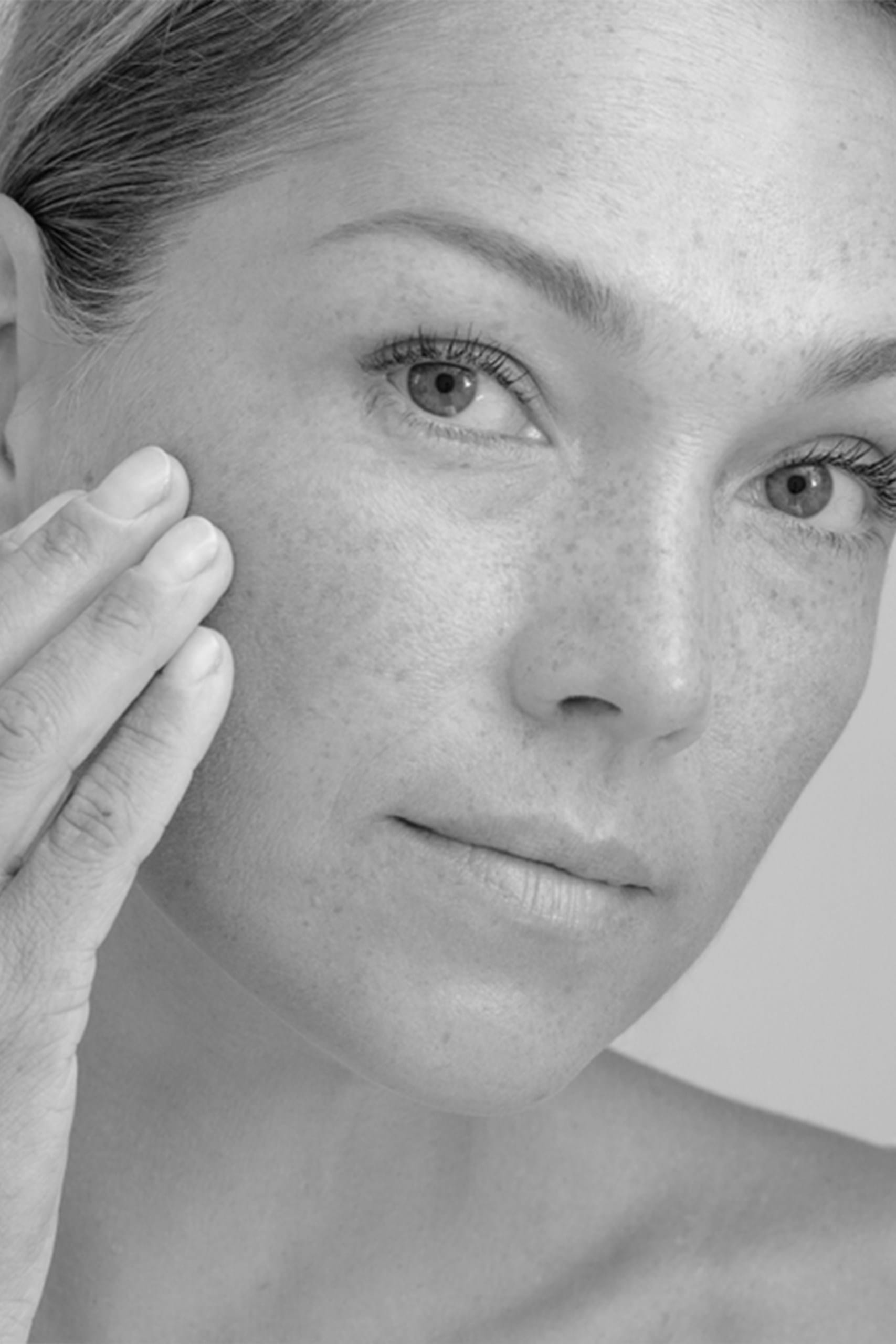
Pigment lesions occur when melanin—the pigment that gives skin its color—accumulates unevenly. The most frequent situations are sunspots (solar lentigo) that appear after years of UV exposure, age spots that become more pronounced with age, freckles (ephelides) that can be congenital or amplified by the sun, and certain forms of superficial melasma, with typical distribution on the forehead, cheeks, and upper lip.
In the vast majority of cases, these lesions are not medically dangerous, but they can be unsightly and affect the uniformity and luminosity of the complexion. The first correct step is always clinical evaluation: some pigment lesions must be examined dermatoscopically or biopsied before any treatment to exclude suspicious lesions.
Only benign, confirmed lesions are candidates for laser or light treatments.

01. What are pigment lesions?
Pigment lesions occur when melanin—the pigment that gives skin its color—accumulates unevenly. The most frequent situations are sunspots (solar lentigo) that appear after years of UV exposure, age spots that become more pronounced with age, freckles (ephelides) that can be congenital or amplified by the sun, and certain forms of superficial melasma, with typical distribution on the forehead, cheeks, and upper lip. In the vast majority of cases, these lesions are not medically dangerous, but they can be unsightly and affect the uniformity and luminosity of the complexion. The first correct step is always clinical evaluation: some pigment lesions must be examined dermatoscopically or biopsied before any treatment to exclude suspicious lesions. Only benign, confirmed lesions are candidates for laser or light treatments.
02. How does the MeDioStar laser work?
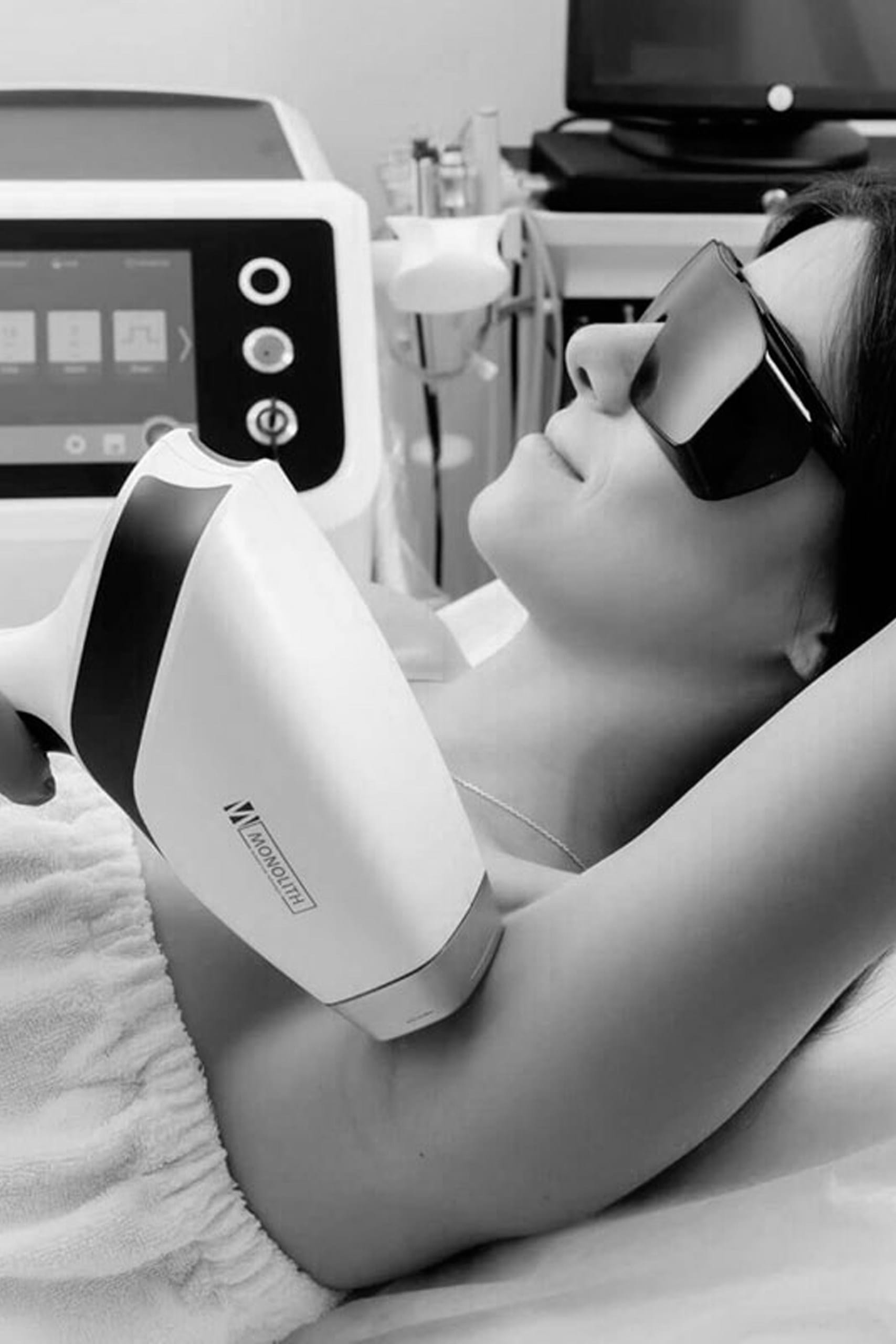
The MeDioStar diode laser (810/940 nm) emits energy that is selectively absorbed by melanin. When the melanin in the lesion absorbs this energy, the pigment fragments into smaller particles; the body gradually eliminates them through natural skin regeneration mechanisms, including the activity of macrophages and epidermal turnover. Due to the wavelengths used, the diode penetrates deeper than equipment strictly focused on superficial pigment (for example, 532 nm), which makes it useful both for medium-deep pigment and for a complementary photorejuvenation effect: improving texture, luminosity, and collagen stimulation.
03. How does the diode act on pigment?
The 810–940 nm range is absorbed by melanin, but more gently and with somewhat lower selectivity than 755 nm (Alexandrite) or 532 nm (Nd:YAG doubled frequency/KTP). The advantage is twofold: better penetration into the dermis for pigment located deeper and increased tolerance to medium-dark phototypes, with a lower risk of post-inflammatory hyperpigmentation. This characteristic explains why MeDioStar is frequently chosen in protocols for skin “evening” and photorejuvenation, not just in reducing spots.
04. Indications for the diode laser in pigment lesions
The MeDioStar diode is especially indicated for solar lentigo, ephelides, superficial post-inflammatory hyperpigmentation, and superficial melasma (with precautions and adapted protocols). It is also an option for patients who want to even out skin tone and diminish the appearance of dullness, including on the neck, décolletage, and back of the hands. A separate category of candidates is represented by people with darker phototypes or recently tanned skin—contexts in which Alexandrite 755 nm or PDL may be riskier from the point of view of burns or hyperpigmentation. The 360° cooling system of the handpiece contributes to the safety of the procedure, decreasing the risk of unwanted thermal reactions and making the treatment comfortable, including on sensitive areas.
05. Benefits of treatment with MeDioStar
Patients typically observe an increase in luminosity and an overall evening of skin color after the first sessions. Sunspots and freckles fade progressively, and the skin texture appears smoother due to collagen stimulation. The procedure is non-invasive and has minimal recovery time: slight redness or sensation of local heat that remits in hours–a few days, rarely fine microcrusts on certain lentigines, which is normal in the process of pigment elimination. It can be safely used on the face, neck, décolletage, and hands, with careful adaptation of the parameters according to skin thickness, phototype, and lesion characteristics.
06. MeDioStar vs. Gold Standard in pigment lesions
- Alexandrite (755 nm). It has long been the reference for hair removal and superficial pigment. Absorption in melanin is very high, which brings rapid results on light skin and superficial lesions. The limitation is the increased risk of burns or hyperpigmentation on dark or tanned skin, which restricts its safe use to high phototypes.
- Q-Switched & Picosecond. It represents the modern standard for some pigment spots and for tattoos. Ultra-short pulses deliver energy peaks that efficiently fragment the pigment (including dense ink particles). The advantage is efficiency on persistent pigment; the limitations are comfort (the procedure can be more painful), higher cost, and sometimes the need for topical anesthesia.
- Pulsed Dye Laser (PDL 585–595 nm). It is the gold standard for vascular lesions, but it can also be used in mixed superficial pigmentations, especially where erythema coexists (for example, rosacea with hyperpigmentation). In pure pigment spots, the efficiency is usually lower compared to Alexandrite or Q-Switched/Pico systems.
- MeDioStar (810/940 nm). It has good absorption in melanin and a “gentler” working profile than Alexandrite or Q-Switched/Pico, with a clear safety advantage on medium-dark skin and tanned skin. It is a suitable choice for sensitive patients, for those who want an overall improvement in the complexion, and for situations in which the risk of hyperpigmentation must be minimized.
The balanced conclusion: for superficial, well-defined pigment, in light phototype, very selective systems (Alexandrite, Q-Switched/Pico) can offer a rapid response. For medium-dark phototypes, for areas recently exposed to the sun, or when an extra quality of the skin is also sought, the MeDioStar diode offers an attractive combination of efficiency and safety.
07. How does a session proceed?
The session begins with make-up removal/cleaning of the area and with standardized photographs, useful for monitoring the evolution. The doctor marks the target lesions, adjusts the parameters according to the type of spot, phototype, and skin thickness, and the handpiece with 360° cooling is applied sequentially. The sensation felt is generally a slight “pinch” or a short-lived heat, well tolerated. A session for the face usually lasts 15–30 minutes, depending on the number of lesions and the treated area.
Immediately after, the skin may be slightly red and warm to the touch. In the following days, some spots may temporarily darken in color, and fine microcrusts may appear; these should not be “helped” to fall off, so as not to produce post-inflammatory hyperpigmentation. Instead, gentle, moisturizing products and rigorous photoprotection are used.
08. Preparation and post-procedure care
Before treatment, it is recommended to avoid sun/tanning beds and self-tanners for 7–10 days, discontinue topical retinoids and irritating acids for 5–7 days, and inform the doctor if using photosensitizing medications. The skin must be intact, without eczema, active herpes, or open lesions.
After treatment, photoprotection with SPF 50 becomes mandatory for at least two weeks, along with avoiding saunas, very hot showers, and intense effort in the first 24–48 hours. Repairing/barrier creams are used, and active products (retinoids, acids) are gradually resumed at 5–7 days, depending on tolerance. For melasma, an adjuvant routine is often recommended: antioxidants, melanogenesis inhibitors (e.g., topical/oral tranexamic acid—if indicated by the doctor, arbutin derivative, azelaic acid) and, always, consistent photoprotection.
09. How many sessions are needed and when do the results appear?
In general, 2–4 sessions are needed at intervals of 3–4 weeks. Isolated sunspots may respond in 1–2 sessions, while superficial melasma requires caution: work is done with moderate energies, combined with targeted skincare, and the results are followed over time to avoid pigmentary “rebound.” The first changes become visible in 2–3 weeks: the spots lighten, the contours become more blurred, and the complexion gains an overall luminosity. The result stabilizes as the epidermal renewal cycle advances (4–8 weeks).
10. When is the laser not recommended?
The treatment is not performed on suspicious, unevaluated pigment lesions; in pregnancy and breastfeeding—especially in melasma—conservative measures are preferred; in the presence of active cutaneous infections, recurrent herpes not prophylactically treated, or on recently intensely tanned skin. Also, a history of post-inflammatory hyperpigmentation requires very cautious protocols and strict photoprotection.
Frequently asked questions
01. Does the treatment hurt?
The sensation is comparable to a small sting or a slight, short burn. The integrated cooling system makes the procedure comfortable for most patients.
02. How many sessions are needed?
On average, 2–4 sessions, at 3–4 weeks interval, depending on the type and depth of the spots, phototype, and individual response.
03. Can all types of spots be treated?
Lentigo, freckles, post-inflammatory hyperpigmentation, and superficial melasma can be treated (with precautions). Very deep spots, some dermal nevi, or tattoos respond better to Q-Switched/Pico.
04. Are the results permanent?
Correctly treated lesions can disappear; however, UV exposure without protection or repeated inflammations can cause new spots to appear. Daily photoprotection is key to maintaining the result.
05. Is it safe for dark or tanned skin?
Yes. The MeDioStar diode has a safety profile superior to Alexandrite or PDL in dark phototypes or on tanned skin, when appropriate settings are used.
What is the cost of pigment lesion treatment with the MeDioStar Asclepion diode laser?
200 RON
Consultation
250 – 400 lei/session
Individual spot treatment
700 – 1,200 lei/session
Complete face treatment
600 – 900 lei/session
Décolletage/hands treatment
The mentioned costs are estimates and may vary depending on case complexity, as well as any additional procedures or investigations required.
The 3-session package benefits from a 15% discount!
A detailed final cost can only be established following a medical consultation, in which the patient’s clinical situation will be assessed and the individualized therapeutic plan will be established. For a personalized estimate, we recommend scheduling a consultation.
