
MeDioStar Asclepion diode laser hair removal
Diode laser hair removal MeDioStar Asclepion is one of the most advanced and predictable methods of removing unwanted hair. The platform delivers energy at two wavelengths – 810 nm and 940 nm – a duo that effectively penetrates the hair follicle, where the target melanin is located, and offers deeper penetration for deeply implanted hairs (armpits, groin, back). This architecture makes the treatment safe and effective on all skin phototypes (I–VI), including tanned or darker skin, when the parameters are correctly adjusted.
An important asset of MeDioStar is the integrated 360° cooling, which protects the epidermis, stabilizes the surface temperature and transforms the procedure into a comfortable and well-tolerated one, even on sensitive areas such as the face or armpits. Pulses can be delivered in fast modes (for large areas) and in regimes adapted to small areas, so that sessions are fast, with minimal time spent in the office and no downtime.
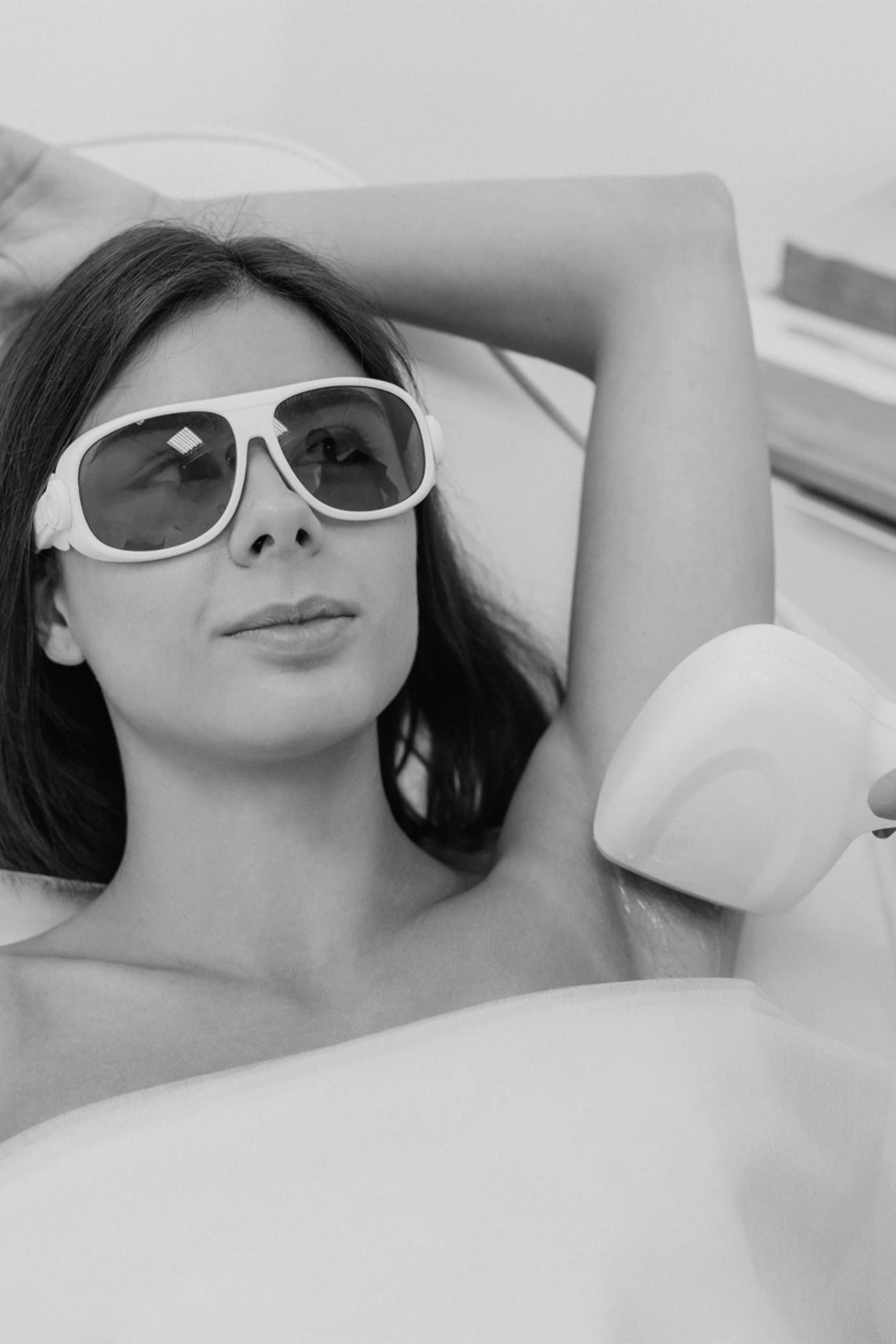
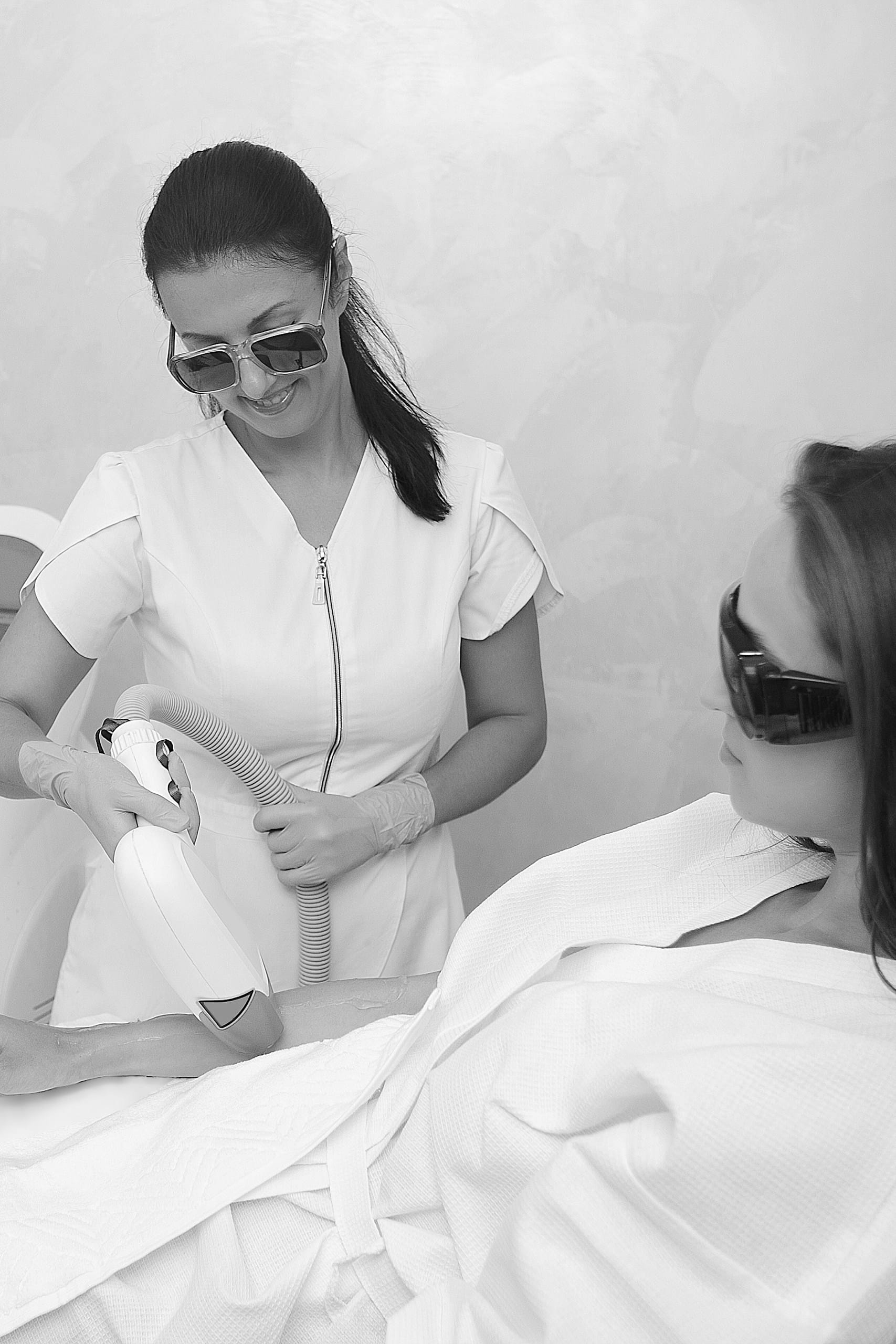
Benefits of MeDioStar diode laser hair removal
The MeDioStar system addresses a wide range of clinical scenarios. For light or dark skin, for thick and dark hair, but also for many of the medium hairs, the laser provides sufficient energy density at the level of the bulb and the lower shaft to produce selective thermolysis. Patients usually notice a visible decrease in hair density from the first sessions, and over time, the interval between the need for shaving lengthens.
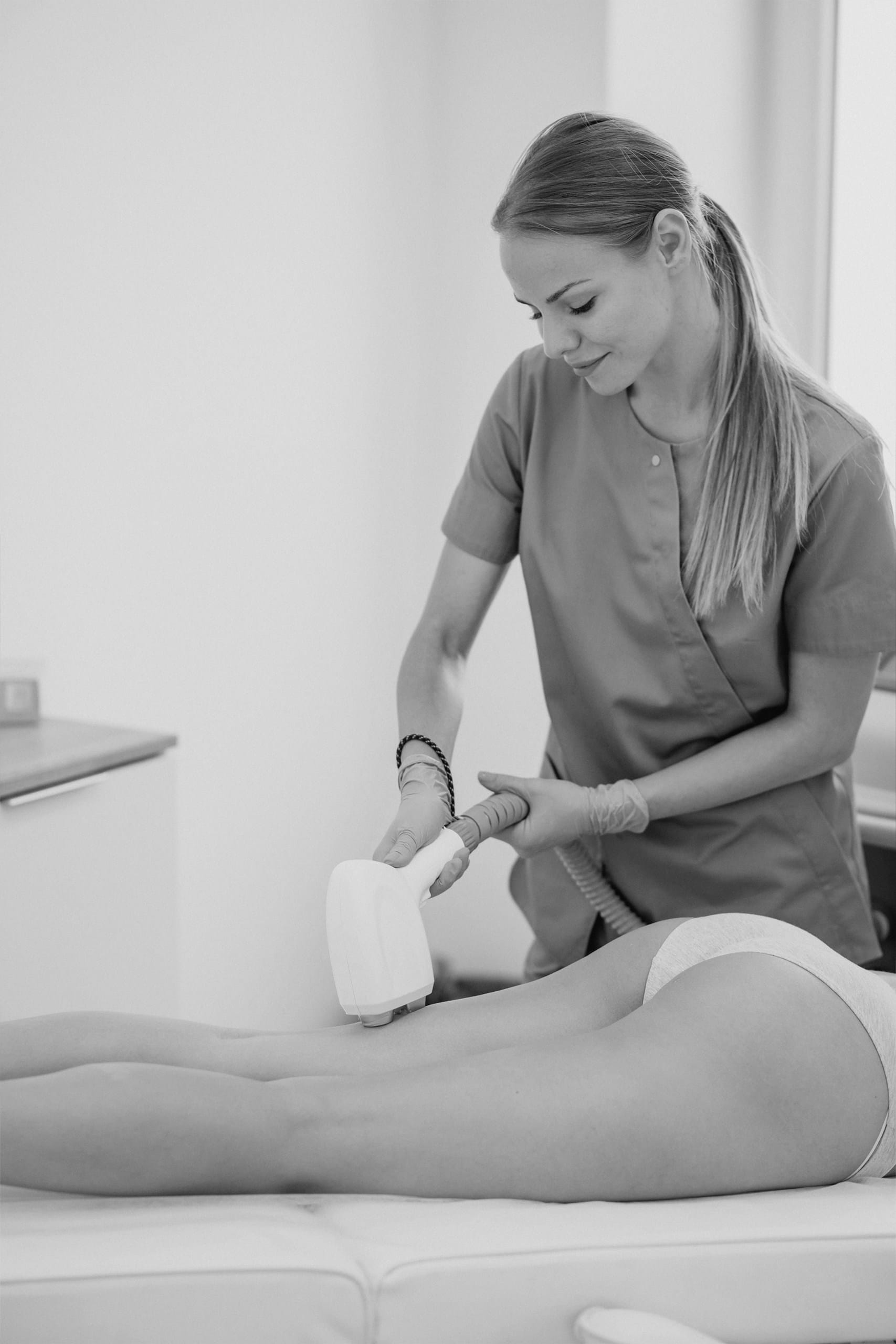
On large surfaces (thighs, calves, back, abdomen), the generous spot and working frequency accelerate treatments, and the precise control of energy reduces the risk of adverse effects on sensitive skin. Continuous cooling ensures maximum safety and comfort, limiting the sensation of “prickling” at the time of the pulse. Overall, patients benefit from short sessions, without anesthesia, without recovery period, with stable long-term results when the protocol is followed.
01. Why Alexandrite was considered the "Gold Standard"
For two decades, Alexandrite 755 nm has dominated the specialty literature and clinical practices, for a few clear reasons. First, high absorption in melanin at 755 nm makes the energy efficiently captured by the hair shaft and bulb, which led to rapid response especially on light skin (phototype I–III), with thin hair or lighter (brown, dark blond). Secondly, clinics that introduced Alexandrite in the 2000s–2010s reported accelerated reductions in hairiness in the first sessions compared to old generation diodes. Thirdly, many of the early clinical studies dedicated to hair removal used Alexandrite platforms (e.g., GentleLase – Candela), cementing the reputation of “gold standard” in international protocols at that time.
This history explains why, still, Alexandrite remains excellent for certain phenotypes (very white skin, fine-medium hair, lighter), and in some centers it is still preferred for face or arms in selected patients.
02. Diode vs. Alexandrite hair removal – which is the best method?
Both diode and Alexandrite (755 nm) are lasers frequently used in permanent hair removal, but there are important differences:
Characteristic | Diode Laser (MeDioStar) | Alexandrite Laser |
Wavelength | 810–940 nm | 755 nm |
Skin types | Suitable for all phototypes (I–VI), including tanned or dark skin | Most effective on phototypes I–III (light skin) |
Hair types | Medium and thick, dark hairs, good results also on lighter hair | Thin and light hairs, less effective on thick hair and dark skin |
Comfort | Less painful, thanks to the integrated cooling system | Slightly more painful on sensitive skin |
Versatility | Large areas + all skin types | More restrictive (light skin, fine hair) |
Conclusion:
- If you have darker skin, you are tanned or have thick, black hair → the MeDioStar diode laser is the optimal choice.
- If you have very light skin and fine hair → Alexandrite may be a good option, but it is more limited in indications.
03. How does a MeDioStar permanent hair removal session go?
The course starts with a consultation: we establish the phototype, density, thickness and implantation depth of the hairs, any skin conditions and the history of tanning or medication (e.g., photosensitizers). The area to be treated must be clean and shaved (ideally 12–24 hours before), without creams/oils on the day of treatment.
During the procedure, the handpiece with 360° cooling slides on the skin and delivers pulses calibrated for the follicular target. The sensation is described as a short heat or slight “stings”, attenuated by cooling; most patients consider it comfortable. The duration varies between 10 and 40 minutes, depending on the area and hair density.
After treatment, a discrete redness or a sensation of local heat may appear, which quickly remits. We recommend avoiding intense sun and sauna for 48 hours, applying a soothing cream and SPF 50 on exposed areas. The hairs will gradually fall out in 1–2 weeks; those remaining usually become finer and rarer with each session.
Standard protocol: 6–8 sessions for optimal results, at 4–8 weeks apart (depending on the treated area and the hair growth cycle). This rhythm follows the synchronization with the anagen (active growth phase), the only stage in which the melanin-rich root can be effectively targeted. In certain regions (face in women, back in men), additional finishing sessions may be necessary.
04. Technical differences: Alexandrite vs. Diode
Characteristic | Alexandrite Laser | Diode Laser (ex. MeDioStar) |
Wavelength | 755 nm | 810–940 nm (sometimes dual) |
Absorption in melanin | Very high (excellent for fine/light hair on white skin) | Medium – good for thick and dark hair |
Penetration into the skin | More superficial (~2–3 mm) | Deeper (~4–5 mm) – reaches deep follicles |
Skin types (Fitzpatrick) | I–III (very light → medium skin) | I–VI (including dark and tanned skin) |
Pain felt | Higher, especially on sensitive skin | Reduced due to integrated cooling |
Safety | Increased risk of burns/PIH in dark skin | Safer for dark phototypes |
Treatment speed | Fast on small-medium areas | Fast also on large areas (larger spot) |
05. Areas that can be treated
The face (chin, mustache, sideburns), armpits, arms and forearms, legs (thighs, calves), back, chest, abdomen and groin/bikini area (in classic or extended versions) can be safely treated. For each region, the parameters are personalized according to the phototype, hair thickness and density, so that efficiency and safety are maximum.
06. What to expect after treatment
Immediately after the session, the skin may be slightly red or warm for a few hours. Respect photoprotection (SPF 50), avoid intense sun exposure, sauna and swimming in the first 48 hours. You can resume normal activities on the same day. The treated hairs will fall out progressively in 1–2 weeks; do not pluck the hairs (waxing/epilator), because you break the cycle and decrease the efficiency of subsequent sessions. Between sessions, shaving is allowed.
For consistent results, maintain regularity of appointments; large gaps between sessions can lead to mismatch with the active phase of the hair and slow down progress.
Why choose permanent hair removal with MeDioStar?
Because it combines premium technology (Asclepion MeDioStar) with medical expertise and a 100% personalized approach. We work with clinically validated protocols, 360° cooling for safety and comfort, and carefully calibrate the energy, pulse duration and frequency for each region. You will notice visible results after a few sessions, with slowing of growth and progressive thinning of the hairs.
In addition, we offer you complete pre- and post-procedure guidance (photoprotection, session rhythm, what to avoid, what is allowed) and monitoring through standardized photos, so that progress is clear and comparable from one visit to another. Our goal is simple and realistic: lasting results, smooth skin, time saved, with care for your safety at every step. Please contact us for further details!
Alexandrite 755 nm remains remarkable on light skin (I–III), especially for fine-medium and lighter hair, which is why many traditional clinics still call it the “gold standard” in that niche. The 810–940 nm diode (ex. MeDioStar) is, however, more versatile and safer on a wide range of patients, including dark phototypes and tanned skin, being excellent for thick hair and deep follicles. Currently, numerous top clinics use the diode as the main technology, keeping Alexandrite as a complement for selected cases.
Useful questions
01. Does it work on very light, white or reddish hair?
The laser works through melanin; white, gray or light reddish hair responds poorly. Alternatives can be discussed (electroepilation in punctual areas).
02. Can I have hair removal if I am tanned?
Yes, MeDioStar allows treatments on tanned skin, but with adapted settings; however, avoid active tanning 7–10 days before and after.
03. Is the result permanent?
Destroyed follicles no longer produce hair; however, hormonal factors or new active follicles can generate new hair over time. Maintenance sessions are recommended (1–2/year) depending on the area.
What are the costs for MeDioStar diode laser hair removal?
150 – 200 RON
Consultation
150 – 300 RON/session
Small areas (mustache, armpits)
350 – 500 RON/session
Medium areas (classic bikini, arms)
700 – 1,200 RON/session
Large areas (legs, back, abdomen)
The indicative price ranges are presented above.
At the consultation, you receive a personalized plan with the estimated number of sessions and an offer adapted to the phototype and selected areas.
Complete package (6 sessions): 20–25% discount
