
Buttock lift
While physical exercise remains an excellent way to shape and tone the buttocks, there are limits to its benefits, especially when genetics or other biological factors intervene.
For many men and women, bodily changes caused by sudden weight loss, pregnancy, or the natural aging process can lead to loss of firmness, appearance of sagging skin, and flattening of the buttocks. In such cases, desired results cannot be achieved through sports or diet alone. If you are experiencing such changes and wish to regain a youthful and toned appearance, a buttock lift may be an effective solution.
This surgical procedure aims to lift and reshape the buttock area, removing excess skin and restoring the natural contour and volume of the body. Buttock lifting can significantly improve body proportions and self-confidence, providing a firmer and more harmonious appearance to the posterior.
How can I help make the buttock lift surgery a success?
01. How can I help make the surgery a success?
Maintaining a state of health as good as possible and a weight appropriate to your age and height will help with a quick recovery, without complications. If you smoke, quit smoking six weeks before the operation; this will help with healing and reduce the chances of complications.
You should not remove/shave hair from the vicinity of the areas where the cuts will be placed on the skin. Maintaining strict hygiene will help reduce the risk of infection.
02. How is a buttock lift performed?
A buttock lift surgery typically takes between 2 to 3 hours to complete, but may take longer depending on the extent of the surgical intervention. In most cases, the surgery is performed under general anesthesia and you will be able to return home within a few hours afterward. Our surgeons perform two types of procedures for buttock contouring:
Brazilian buttock lift method: Through this technique, our surgeons use your own fat to improve the shape of the buttocks. The operation begins with liposuction to remove fat that has accumulated in unwanted areas. The surgeon then processes and purifies this fat and injects it into the upper areas of the buttocks, as well as other locations that could enhance the shape. Creating an attractive contour requires the trained aesthetic sense of an experienced surgeon, and the result is a lifted, rounded appearance.
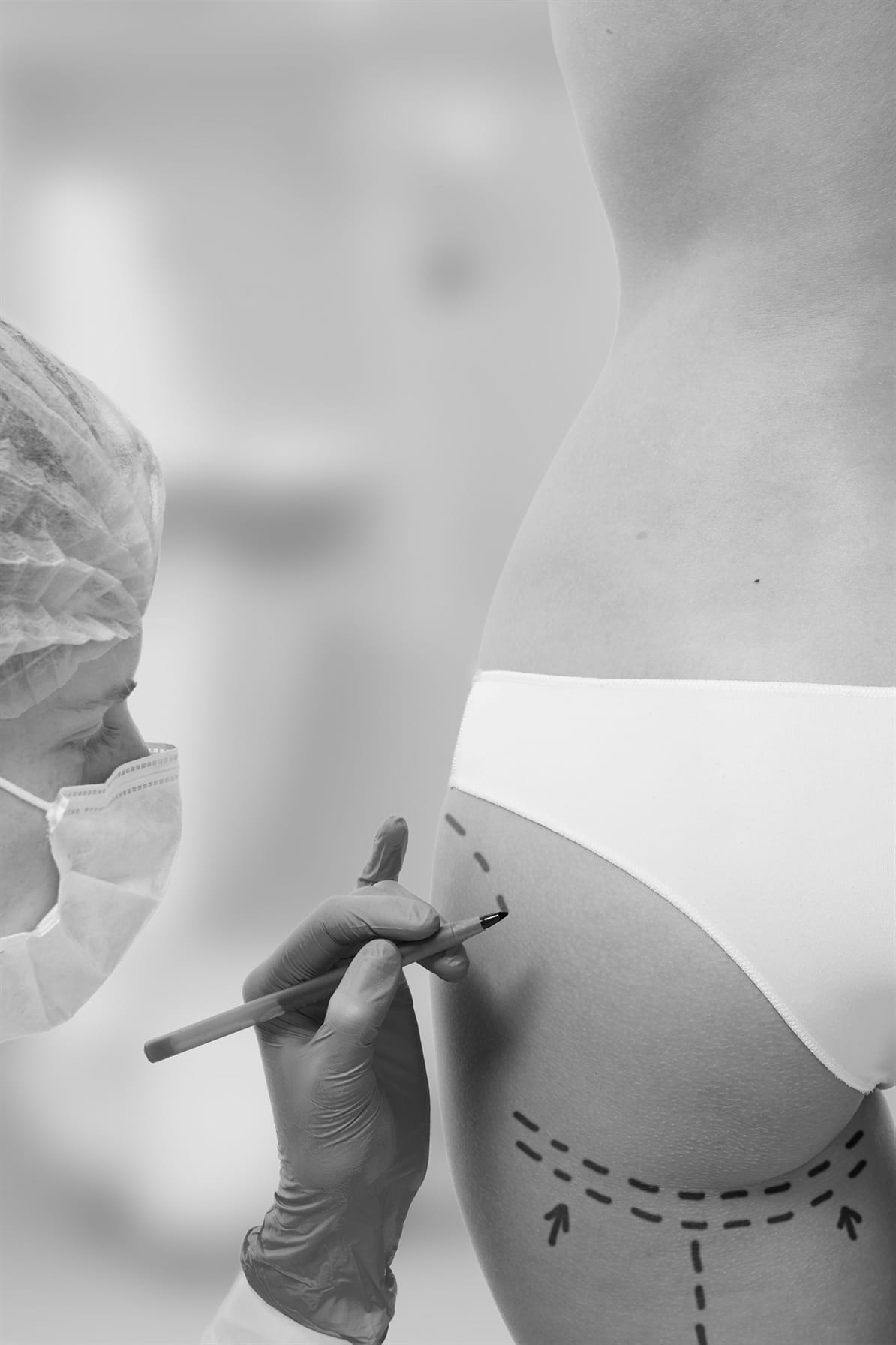
Traditional buttock lift method: The plastic surgeon makes several incisions around the area to be lifted. These are usually at the top of the buttocks at the belt line, along the lateral sides of the buttocks following their natural shape, and under the buttocks. Through these incisions, your plastic surgeon tightens and reshapes the loose skin and, in some cases, removes excess skin tissue and fat deposits, creating a finer and more contoured buttock shape.
Sometimes, buttock lift surgery is combined with other procedures that may include thigh lifting or abdominoplasty. The plastic surgeon will discuss these options with you during the consultation.
03. Recovery and some tips for good recovery.
- Exposure to direct sunlight or in tanning salons. Exposure to the sun causes skin damage. Exposure of operated areas and suture lines can lead to poor healing and hypo or hyperpigmentation color changes. Patients who want to expose themselves to the sun to tan should inform their doctor and postpone this activity until it is risk-free. The harmful effects of sun exposure also occur when using sunscreens.
- Travel. Any surgical procedure involves possible risks and complications that can delay healing and return to normal life. Please notify the surgeon of travel plans, important meetings planned so that the planning of the operation can be done efficiently. However, there are no guarantees that you will be able to return to planned activities on time.
- Long-term results. Changes in the results of the surgical procedure may occur over time due to aging. sun exposure, weight loss or gain, pregnancy, menopause or other circumstances unrelated to the procedure itself.
Information for female patients. It is important to inform the surgeon if you are using contraceptives or if you have the slightest suspicion that you may be pregnant. Many antibiotics can decrease the effectiveness of birth control pills. - Intimate relations after the surgical procedure. Surgery involves the coagulation of blood vessels to stop bleeding and physical activity of any kind can cause the opening of vessels and bleeding and/or hematoma formation. Activities that increase pulse and heart rate can cause additional bruising and bruising, inflammation and the need to open the operation to control bleeding.
04. What does recovery after a buttock lift involve?
All patients heal at their own pace, so it is important to follow the specific instructions that your plastic surgeon provides after the surgical intervention. You will have several monitoring visits at our clinic during the recovery period.
THE FIRST FEW DAYS
After buttock lifting, mild to moderate pain may occur with a degree of discomfort that you can control with medications prescribed by your plastic surgeon. You will need to wear elastic garments as recommended by the surgeon to help the buttocks heal. Rest is very important, but at the same time, it will be necessary to start walking as soon as possible.
FIRST FEW WEEKS
Swelling and bruising will appear on and around the buttocks, which in most cases will disappear within 3 to 4 weeks. Most patients return to work within 2-3 weeks.
Other questions about buttock lift surgery
01. Will there be visible scars after buttock surgery?
While scarring is inevitable in the case of a traditional buttock lift, your plastic surgeon has the skill and talent to make these scars as unnoticeable as possible. They will make incisions in areas that will be covered by clothing and hidden in natural folds and skin creases. You will know before the surgery where the incisions will be, what the resulting scars will be, and you can discuss this with your plastic surgeon. Over time, the scars will continue to fade and eventually become much less visible; however, they will never completely disappear.
In the case of Brazilian buttock lift, the scars are much smaller because the incisions used for liposuction are very small. This is one of the benefits of this approach.
02. Is recovery very uncomfortable?
In most cases, in the first few days to a week after a buttock lift, patients may experience mild to moderate discomfort, which can be alleviated with medication. Some swelling or numbness may also occur, which usually disappears within a few weeks.
03. Will I be hospitalized?
Most buttock lift surgeries are performed on an outpatient basis, and patients can return home just a few hours after surgery. In more complicated cases or if multiple procedures are performed, a short hospital stay may be necessary.
04. How long will the results last?
The results of a buttock lift can last for years, but it is important to eat carefully and exercise to maintain your smooth, tight, and attractive appearance.
General complications associated with surgery
Healing
Certain diseases, nutritional supplements, or medications can delay normal wound healing. Patients who have suffered massive weight loss may have delayed healing or may face wound opening, infection, requiring prolonged hospitalization and additional surgical procedures.
Those who suffer from diabetes or are under long-term steroid treatments may have delayed healing.
Smoking can cause more difficult healing and the need for additional surgical procedures. Healing can also be hindered by inflammation, bleeding, or a long-duration surgical procedure with general anesthesia.
There are nerve endings that can be caught in the scar associated with healing and can produce pain or hypersensitivity, even if larger nerve trunks are not injured.
Massage and other non-surgical procedures, applied at the beginning of the healing process, can alleviate these pains. Therefore, it is important to discuss aspects related to postoperative pain with the surgeon.
Bleeding and hematomas
There may be episodes of bleeding during surgery or postoperatively. In most cases, these are an exception. If postoperative bleeding occurs, emergency treatment may be needed to drain accumulated blood or blood transfusion may be necessary. These complications are truly rare.
It is important to follow postoperative instructions exactly and not perform physical activities during the specified time period.
Administration of aspirin or nonsteroidal anti-inflammatory drugs (ibuprofen) is prohibited for 10 days before and after surgery, as these can increase the risk of bleeding.
Nutritional supplements or herbal medicines can increase the risk of bleeding. A hematoma may appear in the first 2 weeks after surgery, usually after physical trauma to the operated site. Bruising is expected afterward, which should disappear within 2 weeks of surgery.
Infection
It is an unusual complication after surgery. If it occurs, antibiotics will be administered and hospitalization and additional surgical procedures may be necessary.
It is important for patients to specify if they have suffered an infection in the period before surgery. Infections in other parts of the body can lead to infection of the operated site.
Vicious, hypertrophic scars
All types of surgery leave scars, some more visible than others. After surgical procedures, good healing is expected, although abnormal scarring can occur both at the skin level and in deep tissues.
Although attempts are made to place scars in less visible locations, there is a small chance they may be visible, being different in color from the surrounding skin. The appearance of the scar can vary across its surface, can be asymmetric (the left side looks different from the right). There is a possibility of visible scars left by suture threads. Deep tissue scars may require revision or additional procedures to improve their quality.
Altered skin sensitivity
A decrease (loss) of skin sensation in the operated area is frequently encountered. The decrease in sensation may not resolve completely. Itching, sensitivity, or exaggerated response to heat or cold may occur after surgery. These symptoms resolve after a variable period of post-surgical time, but in rare cases can become chronic.
Sutures
In addition to the sutures at the skin level, which are visible, deep sutures are also used. These can be felt under the skin and can externalize through the skin, becoming visible and producing inflammation, in which case they must be removed.
Pain
Pain is one of the symptoms present after surgery. Pain of different variety and intensity can persist after the procedure. Chronic pain occurs very rarely and is caused by nerve endings caught in scars or occurs due to tissue stretching.
Complications due to general anesthesia
General anesthesia
Local anesthesia, but especially general anesthesia, carries risks for the patient. The possibility of respiratory tract injury, cardiorespiratory problems, allergies, anaphylactic shock, or even death are very rare in all forms of anesthesia associated with surgery.
Shock
In very rare circumstances, the surgical procedure can cause trauma, especially when multiple extensive procedures are performed. Although serious complications are rare, infections, excessive fluid loss can lead to serious illness. If surgical shock occurs, hospitalization and additional treatment are necessary.
Allergic reactions
In rare cases, allergies to dressings, suture material, adhesives, blood products, intravenously administered agents, or local creams have been reported.
Serious systemic reactions such as anaphylactic shock can occur in response to medications administered during surgery or prescribed postoperatively. Attention, allergic reactions may require additional treatments.
Cardiac and pulmonary complications
Pulmonary complications can occur secondary to blood clots (pulmonary emboli), fat (fat emboli), or partial lung collapse (atelectasis) after general anesthesia.
Pulmonary emboli can be life-threatening for the patient in certain circumstances. Inactivity, sedentary lifestyle, smoking, contraceptives, and other conditions can increase the incidence of blood clots that reach the lungs and can cause death.
It is important to discuss with the surgeon any symptoms, from leg inflammation to blood clots in other parts of the body, as they can contribute to the formation of pulmonary emboli.
Cardiac complications are a risk associated with any general anesthesia and surgery, even for patients without symptoms who are healthy.
If you suffer from fatigue or breathing difficulties when exerting yourself, chest pain, arrhythmic heartbeats, you should consult a doctor immediately.
If any of these complications occur, hospitalization and additional treatments are necessary. In healthy patients without associated diseases, these complications are very rare.
What is the price of buttock lift surgery?
from €3,800
Buttock lift
The costs mentioned are estimates, and they may vary depending on the surgical technique chosen, the complexity of the case, as well as any additional procedures or investigations required.
A detailed final cost can only be established following a medical consultation, in which the patient’s clinical situation will be assessed and the individualized therapeutic plan will be established. These costs include: the surgeon’s and anesthesiologist’s fees, the hospitalization period, all the medicines and materials needed during the surgery and during hospitalization. For a personalized estimate, we recommend scheduling a consultation.
