
Post-excision reconstruction of skin tumors
Surgical excision of skin tumors, whether benign or malignant, remains the therapeutic standard for removing suspicious formations and preventing local recurrence. Very often, the intervention does not stop with the “cutting” of the lesion: after removal, a tissue defect remains that must be closed safely, with care for both aesthetics and functionality. Post-excision reconstruction is, therefore, an integral part of the treatment: it aims to restore the continuity of the skin, to preserve or restore the normal mobility of the area (especially when we talk about the face, hands or articular regions) and to lead to a scar as discreet as possible. The plan is established individually, depending on the size and location of the defect, the histological type of the tumor, the quality of the surrounding tissues, and your general health characteristics.
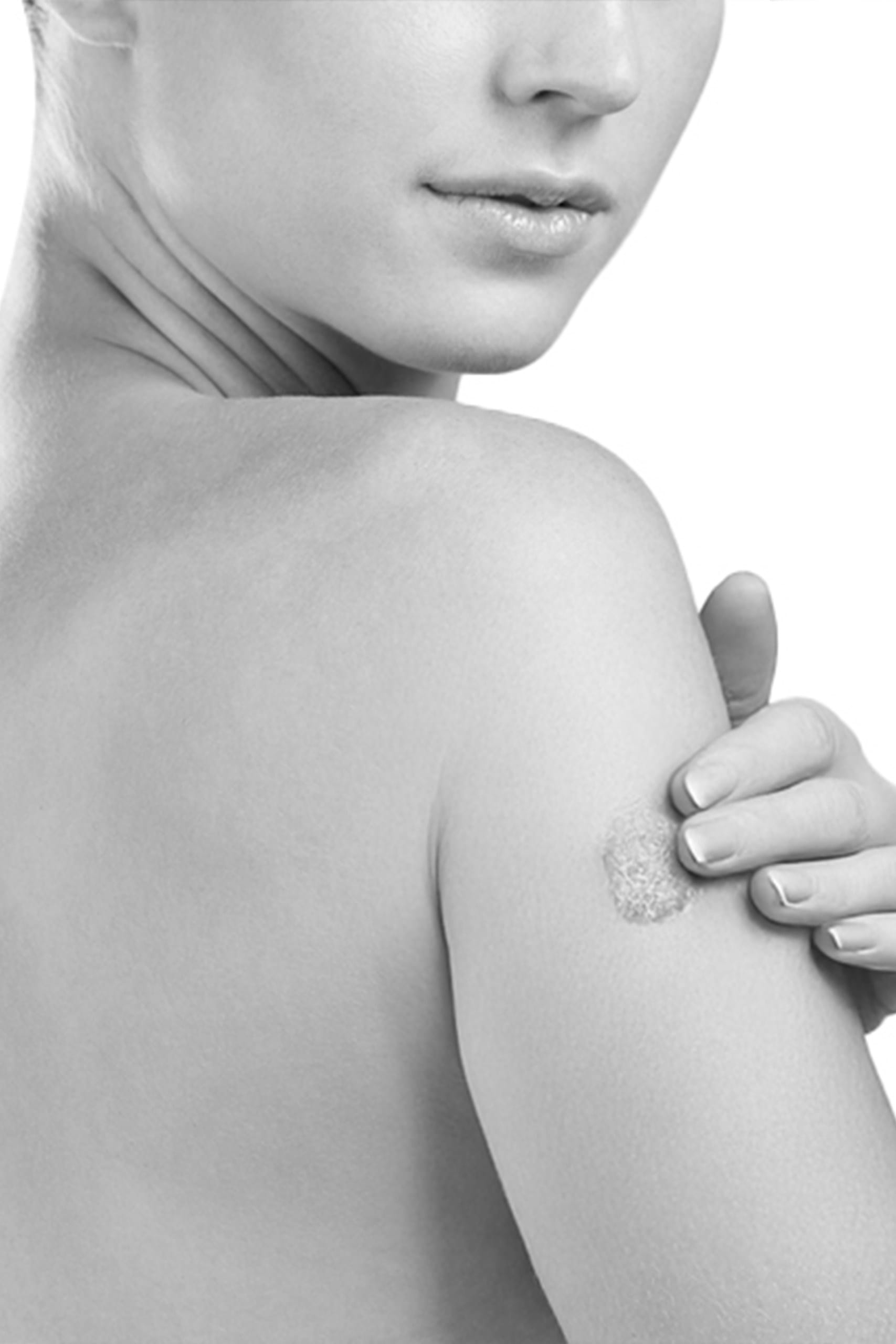
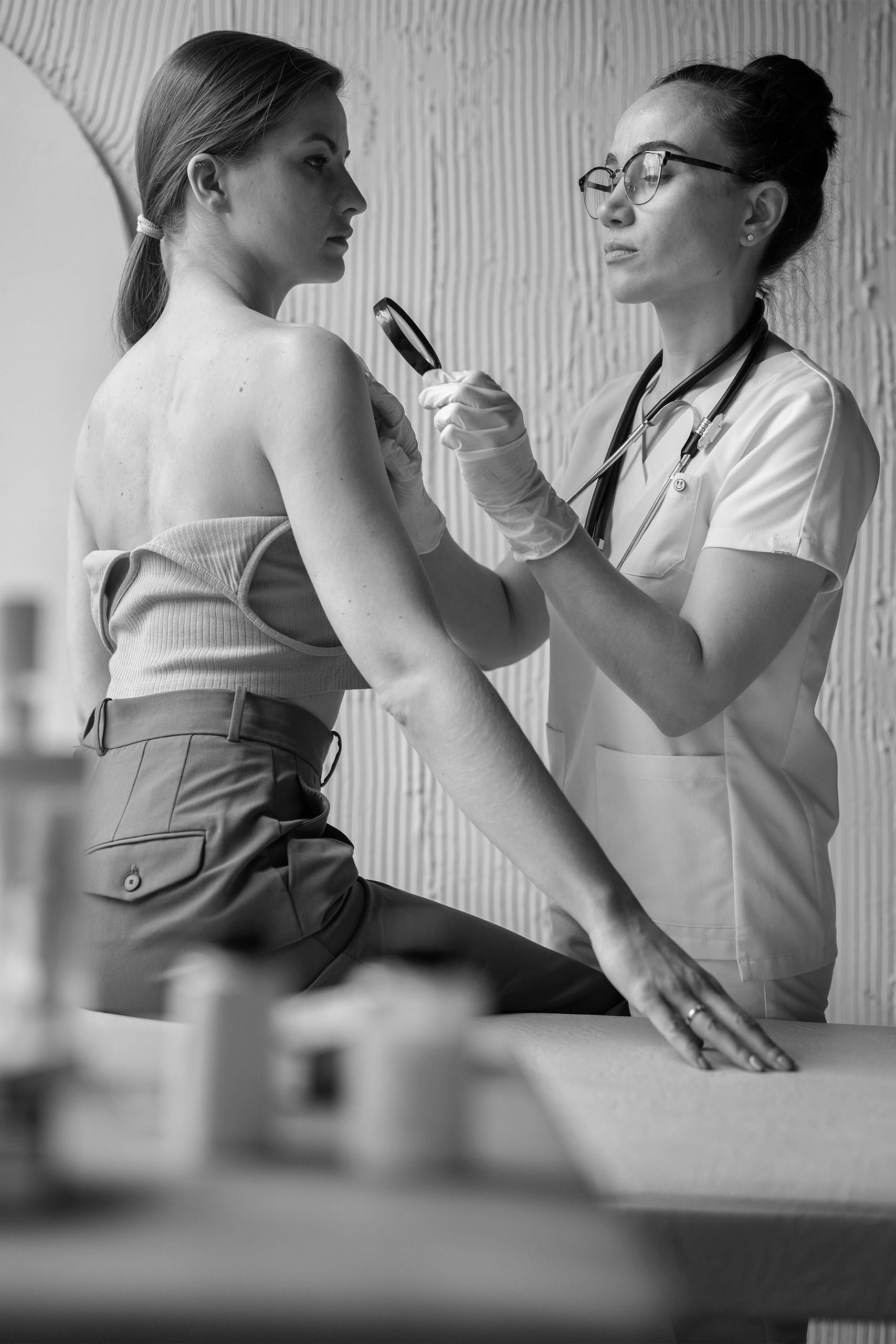
01. What does post-excision reconstruction mean?
After the removal of a skin tumor, the remaining space can vary from a small gap that closes easily to larger defects, especially in areas where the skin is not very elastic (nose, eyelids, perioral) or where freedom of movement must be maintained (hands, elbows, knees). Reconstruction has several simultaneous objectives. First, it restores the continuity of the skin and underlying tissues, protecting the deep structures. Secondly, it aims to minimize the aesthetic impact: a well-planned scar, placed in the natural tension lines of the skin and correctly wrinkled, will camouflage better in the long term. Thirdly, it aims to maintain or restore function – for example, maintaining normal blinking after excisions on the eyelids, correct oral occlusion in the lip area, or fine grasping at the hand level. Last but not least, a correctly conducted reconstruction supports rapid and safe healing, reducing the risk of local decompensation (dehiscence, marginal necrosis, infection).
Reconstruction can be performed immediately after excision (“at the same operative time”), when the safety margins are clinically clear or are verified intraoperatively (for example, using the Mohs technique), or it can be delayed (“two-stage reconstruction”) in selected situations, until histopathological confirmation of free margins. The choice of timing depends on the type of tumor, its location, and the need for additional oncological evaluation.
02. What types of skin tumors are treated?
The spectrum of lesions that require excision is wide. In the area of malignant tumors, skin carcinomas – basal cell (BCC) and squamous cell (SCC) – are the most frequent. BCC has a low potential for metastasis, but an invasive local behavior, which is why margin control is essential to prevent recurrence. SCC has a greater potential for local extension and, in certain contexts, for dissemination, requiring excisions with adequate margins and a well-established follow-up plan. Cutaneous melanoma, in selected cases and in collaboration with the oncological team, involves a separate protocol: excision with variable margins depending on the tumor thickness (Breslow), possible sentinel lymph node biopsy, and adapted reconstruction, with strict adherence to oncological principles.
In the sphere of benign lesions are lipomas (subcutaneous adipose tumors), keratoses (actinic or seborrheic, depending on the case), sebaceous/epidermoid cysts, and other formations that, although not cancerous, can become symptomatic, can become infected, or can raise aesthetic problems. There are also suspicious lesions that require diagnostic excision: in such cases, the excision is done with reduced margins for definitive diagnosis, and the definitive reconstruction can be adjusted later, after the result.
03. What reconstruction techniques are used?
The reconstructive approach usually follows the so-called “reconstruction ladder”, starting from the simplest solutions and reaching the most complex, depending on the need.
- Direct suture. It is the preferred method for small lesions or for elongated defects, in areas where the skin allows the edges to be brought together without excessive tension. For an optimal aesthetic result, the incision is oriented in the tension lines of the skin (Langer) and suture techniques are used that redistribute the forces, reducing the widening of the scar. In certain areas (eyelids, lips), fine sutures are applied on several planes to correctly align the aesthetic margins.
- Skin grafts. When the defect is too large for direct closure or when it would produce unacceptable distortions, grafts are used: thin or intermediate fragments of skin taken from a donor area (for example, retroauricular, supraclavicular, thigh) and applied to the well-vascularized receptor bed. Grafts restore skin coverage, but the color and texture may initially differ; over time, partial adaptation is observed, and massage, topical silicone, and sun protection help with aesthetic maturation.
- Local or regional flap. For exposed areas (nose, cheeks, lips) or for regions where function is critical (eyelids, hand), local flaps are often the solution of choice. By mobilizing neighboring tissues on a vascular pedicle, the defect is covered with skin of similar color, thickness, and texture, resulting in superior aesthetic and functional integration. Frequent examples are transposition flaps (rhomboid, bilobed on the nose), advancement flaps, or rotation flaps. In larger regions, regional flaps can be used, which “bring” tissue from a relatively small distance, preserving vascularization.
- Microsurgical techniques. In complex cases – large defects, exposures of noble structures, the need for three-dimensional reconstruction – free microsurgical flaps can be used, transferred from a distance and revascularized at the level of the neck or face. These solutions are reserved for situations in which local alternatives cannot offer safe coverage or adequate functional results.
The choice of technique is made by integrating several factors: size, location, type of tumor, your age and comorbidities, skin quality in the donor areas, and personal preferences. In all oncological situations, the absolute priority remains complete excision with safety margins; reconstructive elegance comes next, without compromising oncological radicality.
04. Advice for patients
Before the intervention. You will receive a clear set of recommendations. Investigations (tests, prior biopsy, imaging when necessary) confirm the diagnosis and correctly size the intervention. It is important to communicate all the medications you are taking, especially anticoagulants or antiplatelet agents (aspirin, clopidogrel), to adjust the treatment safely. Avoid excessive sun exposure in the targeted area, as tanning and inflammation can increase the risk of complications and influence the quality of the scar. If you smoke, a pre- and postoperative break supports tissue perfusion and decreases the risks of delayed healing.
After the intervention. Correct wound care makes the difference. Respect the dressing and local treatment instructions, keep the area clean and protected from excessive moisture until the dressing is changed. Avoid stretching or stressing the area (especially at the perioral level, eyelids, fingers) to prevent widening of the scar or dehiscence. Presenting to scheduled check-ups allows the doctor to monitor the evolution, to remove the sutures at the optimal time (usually 5–7 days face, 10–14 days trunk/limbs, adapted to the area) and to initiate, in time, scar care measures: topical silicone or silicone strips, massage, possibly taping for tension redistribution. In the medium term, sun protection with high SPF is essential to avoid hyperpigmentation of the scar. If there is a personal tendency to hypertrophic scarring, intralesional corticosteroid injections or other adjuvant therapies can be considered.
In the first days, the appearance of moderate discomfort, controllable with usual analgesics, a slight swelling, or bruising is normal; these gradually subside. Any sign of persistent bleeding, increasing pain, purulent secretions, fever, or changes in skin color should be reported promptly.
05. Possible risks
As in any intervention, there is a set of risks, mostly rare and manageable. Minor bleeding or hematoma formation may occur, especially in richly vascularized areas; local compression and careful hemostasis significantly reduce these situations. Local infection is rare when hygiene and care recommendations are followed, but it remains a theoretical risk that requires monitoring. Scars can become visible or hypertrophic, especially in areas of tension; early management (silicone, massage, possibly corticosteroid) improves the long-term appearance. In reconstructions with grafts or flaps, there is a risk of partial loss, usually small, dependent on vascularization and local conformation. Tumor recurrence is a risk related to the biology of the lesion; therefore, periodic monitoring, possibly through dermatological/oncological check-ups, is part of the postoperative course. Constant communication with the medical team and presenting to check-ups reduce the risks and allow for rapid interventions when needed.
Why choose post-excision reconstruction at Dr. Olimpiu Harceagă?
Experience and rigor make the difference in cutaneous oncological surgery. Dr. Olimpiu Harceagă has a doctorate in Mohs surgery of skin tumors – one of the most modern and effective techniques for the treatment of skin cancers, which allows microscopic control of the margins in real time and maximum preservation of healthy tissues. This expertise translates into precise excisions and intelligently planned reconstructions, with equal attention to oncological, aesthetic, and functional results. Clinical practice includes extensive experience in plastic, aesthetic, and reconstructive surgery, with the use of a wide range of techniques – from advanced sutures and grafts to local or regional flaps – adapted to the particularities of each case.
The approach is modern and multidisciplinary: we collaborate with dermatologists for dermatoscopic diagnosis and follow-up, with pathologists for rigorous histological evaluation and, when necessary, with oncologists for cases that require complementary treatments. Each patient benefits from a personalized plan, clearly communicated, with pre- and postoperative photographs, with explanations about alternatives, benefits, and risks. Careful postoperative monitoring, the check-up program, and guidance for scar care offer you predictability and a sense of security throughout the healing process.
What is the price of breast lift surgery?
€3800
Mastopexy without implant
€5,500
Mastopexy with implant
The costs mentioned are estimates, and they may vary depending on the surgical technique chosen, the complexity of the case, as well as any additional procedures or investigations required.
A detailed final cost can only be established after a medical consultation, in which the patient’s clinical situation will be assessed and the individualized therapeutic plan will be established. These costs include: the surgeon’s and anesthesiologist’s fees, the period of hospitalization, all the medicines and materials needed during the surgery and during hospitalization. For a personalized estimate, we recommend scheduling a consultation.
