
Facial Lift & Neck Lift
Inevitably, the passage of time leaves its mark on our bodies. This is all the more evident on the face and neck. Our features change with each passing year: the skin and tissues lose their elasticity and firmness, begin to sag, the folds and lines on our face and neck begin to deepen, and wrinkles appear. Depending on our genetic inheritance and lifestyle, this can happen even sooner than we would have expected.
When you feel that the image in the mirror no longer represents you, it may be time to turn to plastic surgery. Two of the most appreciated procedures when it comes to erasing the traces of the years are surgical facelift and neck lift.


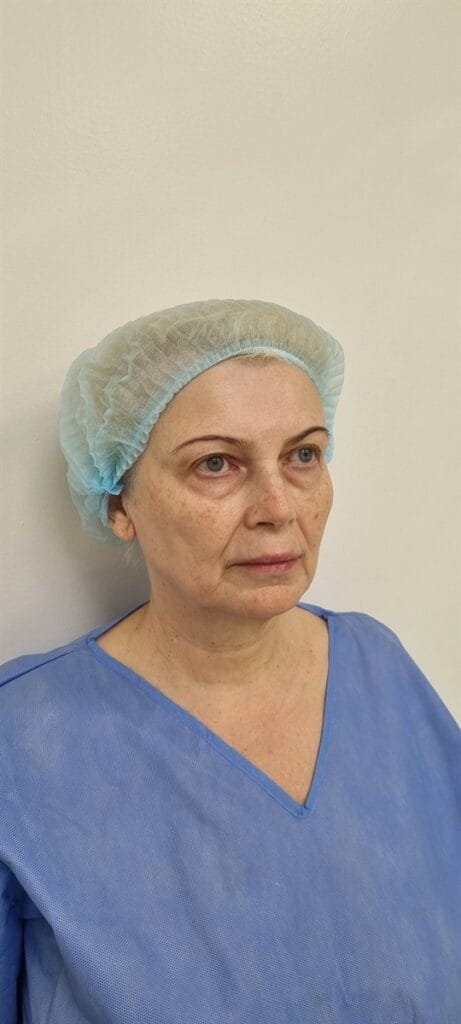


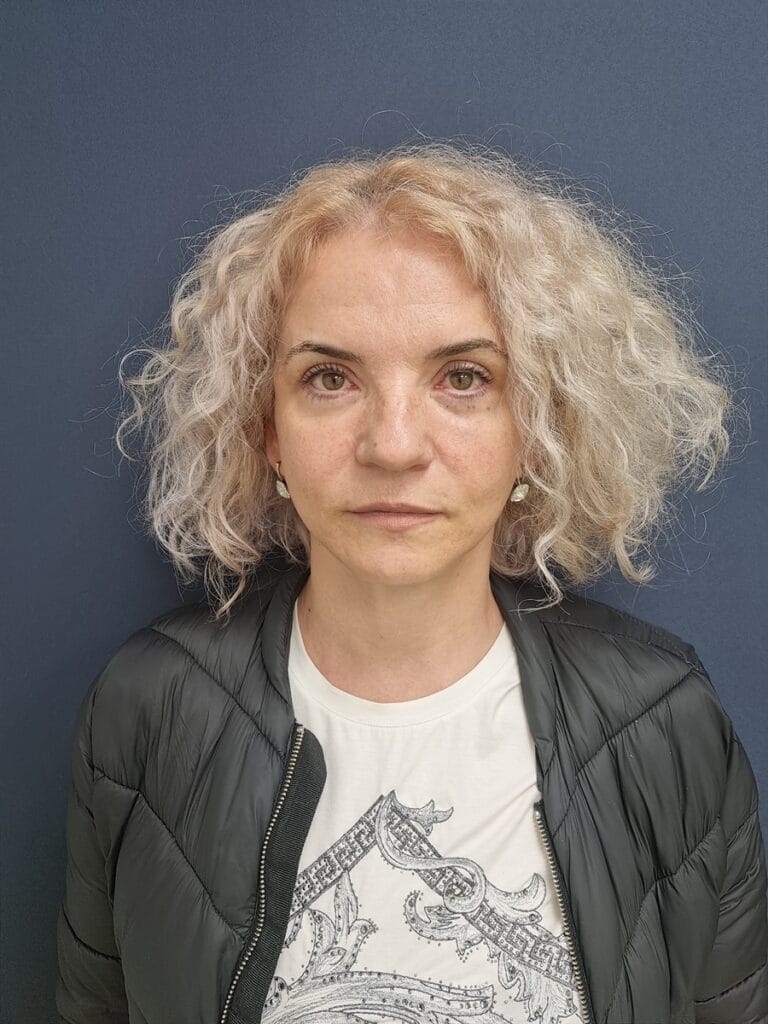
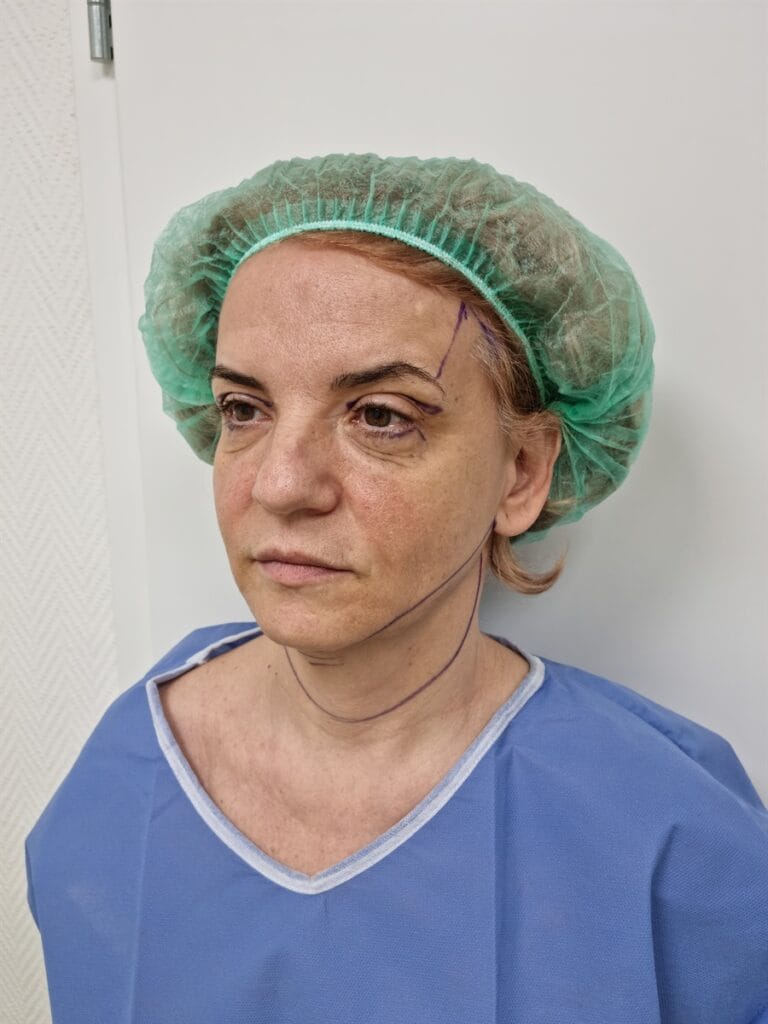


What Do Facelift and Necklift Mean?
01. What is a Facelift and Necklift?
Face lifting and neck lifting are some of the most interesting and appreciated surgical interventions performed by plastic surgeons. But what do facial lifting and neck lifting actually mean?[1] A facelift is an operation to tighten and lift the loose skin of the face below the eyes (everything related to interventions above the eyes is called a brow lift). A neck lift tightens and lifts the skin on the neck.
02. Pre-surgery preparation
First of all, you will meet with Dr. Olimpiu Hârceagă and discuss the reasons behind your decision to resort to plastic surgery and your expectations. During the consultation:
- You will be explained in detail what this surgical procedure involves;
- You will be asked questions regarding your medical history and the medications you are taking (whether or not they have been prescribed to you);
- Your face and neck will be examined, and photographs may be taken (with your consent);
- The doctor will ensure that you are a good candidate for surgery (if you are overweight or intend to become pregnant, the surgeon may suggest delaying your surgery).
Maintaining a state of health as good as possible and a weight appropriate for your age and height will help with a quick recovery, without complications. If you smoke, try to quit at least six weeks before the operation; this will help with healing and reduce the chances of complications. You should not remove/shave hair from the vicinity of the areas where the cuts will be placed on the skin. Maintaining strict hygiene will help reduce the risk of infection. In the case of female patients, it is important to inform the surgeon if you are using contraceptives or if you have the slightest suspicion that you might be pregnant. Many antibiotics can decrease the effectiveness
of birth control pills.
03. Facelift and Necklift Procedure
Breast reduction surgery means removing fat, tissue
A facelift involves lifting and repositioning the skin and soft tissue of the face. During the operation, cuts are made on both sides of the face, in front of the ear, and extend along the hairline, in front of or behind the ear cartilage and around the back of the earlobe, in the folds behind the ear and then into the lower scalp. In some cases, the surgeon may make a small incision under the chin for neck lift surgery.
Depending on the desired results, only the skin above the neck can be lifted (only a facelift), only the neck and skin can be intervened on (only a necklift), or the neck muscle and the skin above it are tightened, lifted and sewn towards the solid structures in front of and behind the ear (a facelift and neck lift). Excess skin is then removed, and the remaining skin is fixed in place. Fats and tissues are redistributed and sometimes added to the face.
You should keep in mind that a facelift only improves the lower half of the face, especially the jawline. If you have drooping eyebrows and wrinkles on your forehead, the surgeon may suggest a browlift (lifting of the upper line/eyebrows). Sagging skin, with fine wrinkles, freckles and rough areas, will benefit more if a chemical peel or laser resurfacing is also performed, which can be performed together with a facelift, a browlift or a neck lift.
glandular tissue and excess skin.
Before the operation, you must maintain a state of health as good as possible and a weight appropriate for your age and height, for a quick recovery, without complications.
If you smoke, quit smoking six weeks before the operation; this will help with healing and reduce the chances of complications.
You should not remove or shave hair from the vicinity of the areas where the cuts will be placed on the skin. Maintaining strict hygiene will help reduce the risk of infection.
04. Post-surgery recovery
Facelifts and neck lifts are usually performed under general anesthesia or under local anesthesia. You may need to be given antibiotics to keep the wounds clean. You may have drainage tubes in your face or neck to drain any remaining fluid or blood. These tubes will be removed when the fluid or blood has been drained, usually before you return home. You will feel your face and neck tight and irritated, but using analgesics should be enough to keep you at a comfortable level.
Here’s what you can expect:
- You will have bandages applied to your face and neck – most surgeons will bandage your face to reduce bruising and swelling; the bandages are maintained for 1-2 days, and the stitches will be removed after 7-8 days;
- It is normal to have numbness of the skin of the cheeks and ears – this will usually improve in a few weeks or months, although there may be a long-term loss of skin sensitivity in front of the ears; it is advisable to sleep with extra pillows to keep your head elevated in the first days after the operation;
- You will be able to get out of bed on the same day as the surgery and you will be able to carry out light activities after two weeks – avoid intense activity, saunas and massage for at least two weeks;
- At first, your face will be swollen and there will be scars and bruises; these can be easily hidden or masked, especially in the case of women; some men choose to let their beard grow after such a procedure to hide the scars; in general, the scars on the hairline are not visible, but the hair will be kept shorter immediately around the wound. There may be a slight reduction in hair growth at the temples, but this is not usually a problem, unless the hair is very thin and multiple lifts are performed.
- You should not lift heavy objects for a few weeks and avoid bending over or having sexual relations for at least two weeks (physical activity of any kind can cause the vessels to open and bleed and/or form a hematoma; activities that increase the pulse and heart rate can cause additional bruising and bruising, inflammation and the need to open the operation to control bleeding);
- If you have travel plans or important meetings planned, inform your surgeon in advance; any surgical procedure involves risks and possible complications that can delay healing and return to normal life; your plans will be taken into account when the intervention is scheduled, but there are no guarantees that you will be able to resume your activities on time.
For a good recovery:
- Resume your activities gradually;
- Avoid exposure to the sun or visits to the solarium – exposure of the operated areas and suture lines to the sun can lead to poor healing and hypo or hyperpigmentation color changes, whether or not sunscreen is used.
The results of the procedure are not permanent. Over time, due to aging, sun exposure, weight loss or gain, pregnancy, menopause or other circumstances, changes may occur in the face and neck, unrelated to the procedure itself.
05. Why choose Dr. Olimpiu Hârceagă?
As every time you resort to surgical procedures, choosing the doctor who performs them is the most important thing you can do. The reasons why you should turn to Dr. Olimpiu Hârceagă are numerous, but we will only mention a few of them:
- Double specialization in Plastic Surgery and Dermatology;
- He completed 3 years of specialization abroad and worked as a resident in the plastic surgery service of John Radcliffe Hospital, part of Oxford University Hospitals, one of the three major plastic surgery services in the UK; he also completed training courses in Belgium, Brussels, at the UZ Brussel University Hospital, in Stuttgart, at Marrien Hospital, and in Munich, at Munchen Bogenhausen Klinikum;
- He is a perfectionist for whom every half millimeter counts;
- Collaborates with several clinics in the country (Cluj Napoca, Sibiu, Turda) and abroad;
- He makes sure that at each consultation he offers his patients all the information they need to make the right choice;
- Can perform a wide range of surgical and non-surgical procedures;
- Maintains constant contact with experts in the field of aesthetic surgery and uses the latest techniques available;
- You can benefit from a free online video consultation.
Who is the Ideal Candidate for Facelift and Necklift?
A facelift offers the best results when the face and neck have begun to sag, but the skin still has some elasticity, and the bone structure is strong and well defined. Most people who resort to facelifts are between 40 and 60 years old, but such procedures can also be performed successfully in people aged 70-80. Keep in mind that it should not be obvious that you have had a facelift, but you should look younger, healthier, full of life and more cheerful.
Patients' Opinion
As the years go by, the appearance and shape of our face changes. Sagging skin and all the other changes that occur can make us look permanently tired, sad, even older than we actually are. In such situations, procedures such as facelift and neck lift can help us regain our youthful appearance. Schedule a consultation to find out if you are a suitable candidate for such procedures or what other solutions you can turn to.

Frequently Asked Questions
01. How long does the surgery take?
The operation lasts around five hours.
02. Is hospitalization required?
You will remain hospitalized for one night, being under medical supervision.
03. What are the risks of the surgery?
As with any other surgical intervention, there are certain risks associated with a facelift or necklift:
- Certain factors, including diseases, nutritional supplements or medications, can delay the normal healing of wounds (e.g. diabetes, steroid treatment, smoking, inflammation and bleeding, long-term general anesthesia).
- There are nerve endings that can be trapped in the scar associated with healing and can produce pain or hypersensitivity even if larger nerve trunks are not injured; it is important to discuss aspects related to postoperative pain with the surgeon;
- Bleeding and hematomas – there may be episodes of bleeding during or after the operation. In most cases, these are an exception, but, if they occur, emergency treatment may be needed to drain the accumulated blood or a blood transfusion; it is important to follow the postoperative instructions exactly and not to perform physical activities during the specified period of time; a hematoma can appear in the first 2 weeks after the operation, usually after physical trauma to the operated site; bruises (bruises) are to be expected after the operation, which should disappear in 2 weeks.
- Infection – is an unusual complication after surgery; if it occurs, antibiotics will be administered and hospitalization and additional surgical procedures may be necessary;
- Vicious, hypertrophic scars – all types of operations leave scars, some more visible than others; although attempts are made to place the scars in inconspicuous places, there is a small chance that they will be visible, being different in color from the skin in the vicinity;
- Altered skin sensitivity – a decrease (loss) of skin sensitivity in the operated area is frequently encountered, which may not be completely resolved; itching, sensitivity or exaggerated response to heat or cold may occur after an operation; in rare cases, such symptoms can become chronic;
- Sutures – in addition to the sutures on the skin that can be seen, deep sutures are also used; these can be felt under the skin and can externalize through the skin, becoming visible and producing inflammation, requiring their removal;
- Pain – pain of varying variety and intensity may persist after the operation;
- Anesthesia – local anesthesia, but especially general anesthesia, presents certain risks for the patient; the possibility of injury to the respiratory tract, cardio-respiratory problems, allergies, anaphylactic shock or even death are very rare in all forms of anesthesia associated with surgery;
- Shock – in very rare circumstances, the surgical procedure can cause trauma, especially when multiple extensive procedures are performed; although rare, serious complications, infections, excessive fluid loss, can lead to serious illnesses;
- Allergic reactions – in rare cases, allergy to dressings, suture material, glue, blood products, intravenously administered agents, local creams have been reported; serious systemic reactions may occur in response to medications administered during surgery or prescribed postoperatively; allergic reactions may require additional treatments;
- Cardiac and pulmonary complications – pulmonary complications can occur secondary to blood clots (pulmonary emboli), fat (fat emboli), or partial lung collapse (atelectasis) after general anesthesia; pulmonary emboli can be life-threatening in certain circumstances; inactivity, sedentary lifestyle, smoking, contraceptives, and other conditions can increase the incidence of blood clots that reach the lungs and can cause death; it is important to discuss with your surgeon any symptoms such as leg swelling or blood clots in other parts of the body as they can contribute to pulmonary emboli formation; cardiac complications are a risk associated with any general anesthesia and surgery, even for healthy patients without symptoms; if you experience fatigue or breathing difficulties during exertion, chest pain, or irregular heartbeats, you should seek immediate medical attention; if any of these complications occur, you will require hospitalization and additional treatments.
04. What are the alternative treatments?
Face and neck lifts are the most effective methods to restore firmness to facial and neck skin. However, these operations do not remove wrinkles around the eyes, forehead, or mouth. Other treatments, such as anti-wrinkle toxin injections, can help in this regard.
Face and neck lifts do not change the texture and appearance of the skin, although treatments such as laser resurfacing (where a laser is used to burn the skin surface in a controlled manner) or chemical peeling (where a chemical substance is applied to peel off the skin surface) can help in this regard. In some cases, grafting or lipofilling (where fat removed through liposuction from another part of the body, such as hips or thighs, is injected into the face) can be used instead of or as well as a facelift to make your face and skin look younger.
Sometimes, drooping eyebrows can be the main issue. In this case, a browlift operation, performed alone or together with a face or neck lift, can help tighten facial skin.
What are the Costs of Facelift and Necklift Surgery?
EUR 4500 - 5500
Facelift and Necklift Surgery Costs
The mentioned costs are estimates and may vary depending on case complexity, as well as any additional procedures or investigations required.
A detailed final cost can only be determined after a medical consultation, during which the clinical situation will be evaluated and an individualized treatment plan will be established. For a personalized estimate, we recommend scheduling a consultation.
Recommended Articles

Asymmetrical breasts: Causes and solutions for their correction
The shape, size, and position of breasts differ from woman to woman and can change throughout life, which is not always to their owners' liking. Another detail that many women find unsatisfying is that the size, shape, and position of one breast may not match the other. This problem is called breast asymmetry and is quite common.

Sagging Breasts After Breastfeeding: What Effective Solutions Exist?
Breastfeeding is a natural process with numerous benefits for both mother and baby. However, like pregnancy, it can change the appearance of breasts, and the results are not always what mothers desire. Changes in their shape or size may or may not be to women’s liking, but sagging breasts is never an aspect that pleases them.[3]

Deviated Septum: Symptoms and Treatment Options
The nasal septum is the osteocartilaginous wall located in the middle of the nose that separates the two nasal passages. When it moves to the left or right, a deviated septum occurs. It’s a very common condition, sometimes asymptomatic.

Autologous Fat Transfer: What It Is and How It’s Used
Usually present in large quantities and relatively easy to harvest, autologous (own) fat is a natural filler used in both aesthetic and reconstructive procedures for augmenting or reshaping certain body areas.[1] Continue reading to learn more about this procedure and its uses.
How to Prevent or Eliminate Expression Lines and Sagging Skin
As skin ages, it becomes thinner, loses elasticity, and its ability to retain moisture. Most often, signs of this skin aging will be visible first on our face. Two of these signs are expression lines and sagging skin.[3]
Types of facial lifting. Benefits and indications for each
As we age, the appearance and shape of our face changes. Facial muscles weaken, skin loses elasticity, begins to sag, and wrinkles appear. Depending on lifestyle and genetic inheritance, these signs of aging can appear even earlier than expected.
