Eyelid Ptosis (Drooping Eyelids): Causes and Treatment Options
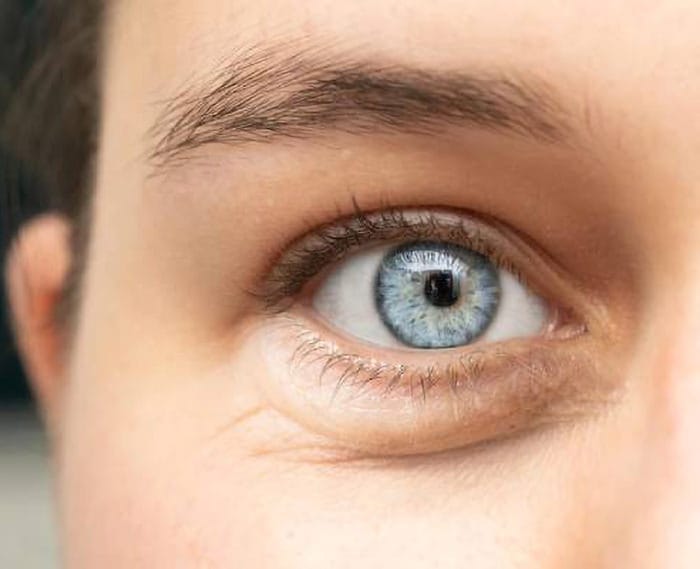
What is eyelid ptosis?
Eyelid ptosis is simply the medical term used to describe the complete or partial drooping of the upper eyelid. It can affect any of us, regardless of age, gender, or race, and can be mild (the eyelid droops only slightly) or severe (the eyelid has drooped so much that it covers the pupil). In the latter case, it will have not only aesthetic but also functional consequences, as it can limit or even completely block normal vision.[5]
If the affected person is a child, there is a risk of developing various complications, including:
- Astigmatism;
- Abnormal head position with chin raised;
- Amblyopia (“lazy eye”).[4]
What are the causes of eyelid ptosis?
Eyelid ptosis can have various causes, including:
- Weakening of the muscle that lifts the eyelid (levator muscle);
- Damage to the nerves that control that muscle;
- Sagging of the upper eyelid skin.

Drooping eyelids can also result from the normal aging process or from an injury. Additionally, ptosis can be present from birth (congenital eyelid ptosis) or can be associated with certain conditions. Among the diseases that can lead to eyelid drooping are:
- Tumors located around or behind the eye;
- Diabetes;
- Horner’s syndrome;
- Myasthenia gravis;
- Stroke.[4]
How can eyelid ptosis be treated?
Treatment of eyelid ptosis depends on its cause and severity. Most often, surgical treatment will be used.
If eyelid ptosis is caused by poor functioning of the muscle that lifts the eyelid, an operation will be performed that involves repositioning through resection or strengthening of the upper eyelid levator muscle or attaching it to other muscles that can lift it.[5]
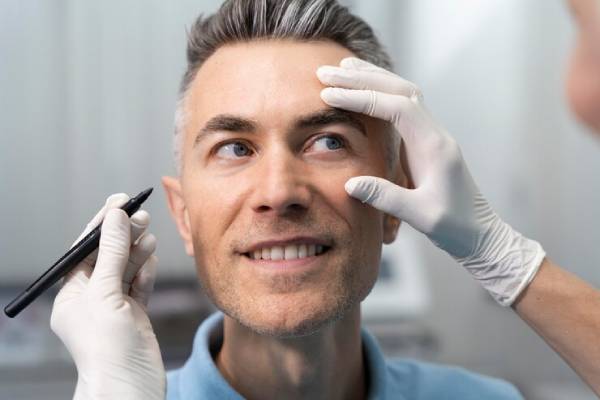
In cases where the droopy, sagging appearance of the eyelid is due to excess skin at its level, blepharoplasty can be used, an aesthetic surgical procedure for correcting the appearance of the area around the eyes.
What the blepharoplasty procedure involves
During the blepharoplasty procedure, the surgeon will remove excess skin and fat from the upper eyelid area (upper blepharoplasty) and/or lower eyelid area (lower blepharoplasty).
What the procedure itself involves depends on the type of blepharoplasty. In the case of upper blepharoplasty, the surgeon will make an incision at the natural fold of the upper eyelid, remove or reposition fat deposits, tighten muscles, and remove excess skin.
Blepharoplasty is performed on an outpatient basis (this means you can go home shortly after the procedure), with local anesthesia and sedation; in more complex cases, general anesthesia may also be used. Depending on the desired results, it can be combined with other procedures.[1][2]
When blepharoplasty is indicated
In general, the main indications for blepharoplasty are sagging skin around the eyes, fat deposits in the eyelid area, drooping lower eyelids, or excess skin and fine wrinkles at their level. Of course, it is a procedure that can be used not only for aesthetic considerations but also functional ones, when sagging skin affects vision.[1][2]
Being a surgical procedure, there are certain conditions that a person must meet to be considered a good candidate:
- To have good health, without conditions that could affect healing;
- To not smoke or be willing to quit smoking;
- To have realistic expectations.[1]
What results you can expect
The results of blepharoplasty will be long-lasting, but it cannot be guaranteed that you will not experience eyelid drooping in the future as the aging process continues. In some situations, it may not be possible to achieve optimal results with a single surgical procedure and another surgical intervention may be necessary.
Regarding immediate results, there may be swelling or bruising after the procedure, but these should improve after 10 to 14 days. Complete healing may take several months. To ensure the success of the procedure, it is very important to strictly follow the postoperative instructions you will receive.[1][4]
Eyelid ptosis or drooping eyelids represents a not uncommon problem that can affect both adults and children, with possible serious negative consequences on vision. We can be born with it or it can develop over time from various causes, from certain conditions to loss of skin elasticity as part of the natural aging process. Depending on its cause and severity, the necessary treatment will be determined. Schedule a specialist consultation with Dr. Olimpiu Hârceagă to find out how you can improve the appearance of your eyelids.
Bibliography:
- “American Society of Plastic Surgeons.” American Society of Plastic Surgeons, 2020. Accessed 22 Nov. 2022.
- Cherney, Kristeen. “What to Expect from Blepharoplasty.” Healthline, Healthline Media, 2 Nov. 2017. Accessed 22 Nov. 2022.
- “Eyelid Drooping: MedlinePlus Medical Encyclopedia.” Medlineplus.gov, 2019. Accessed 22 Nov. 2022.
- “Ptosis – American Association for Pediatric Ophthalmology and Strabismus.” Aapos.org, 2020. Accessed 22 Nov. 2022.
- “What Is Ptosis?” American Academy of Ophthalmology, 9 Sept. 2022. Accessed 22 Nov. 2022.
