Asymmetrical breasts: Causes and solutions for their correction
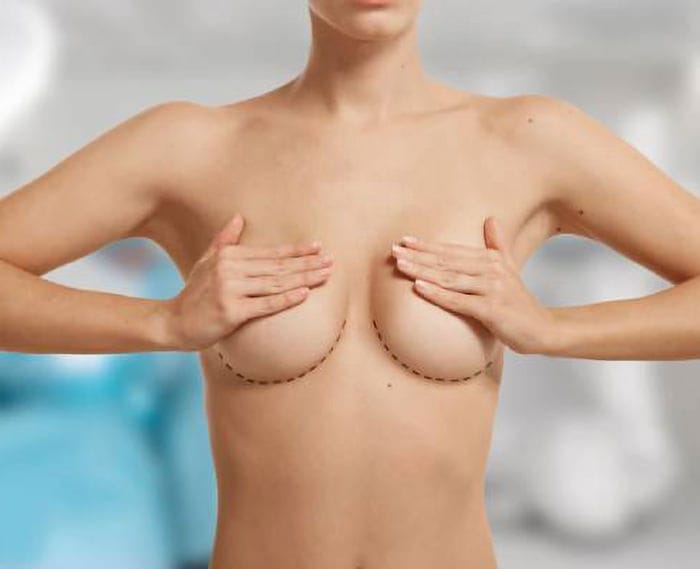
As long as it is not too obvious, it does not necessarily represent a source of dissatisfaction. In some cases, however, the difference between the two breasts is visible enough to create complexes and it can be difficult to find solutions to hide it. Why this difference between breasts appears and what solutions can be used in such situations you will find out from the article below.
What are the causes of breast asymmetry
The first thing we need to mention is that it is absolutely normal for your breasts not to be identical, even if they are fully developed, and there are several possible explanations for this.
One of them is genetic inheritance. If your mother or grandmother has asymmetric breasts, yours probably won’t be equal either. Also, during puberty or adolescence, when breasts begin to develop, it may happen that one of them grows faster than the other, although it is not clear why this happens. Usually, the other will catch up, but this may take some time. It is equally possible that the difference between the two breasts will never disappear.
Besides genetics and changes that occur during puberty, other possible causes of breast asymmetry are:
- Pregnancy and breastfeeding – during pregnancy, the size and shape of breasts can change as they prepare for breastfeeding; differences between the two breasts can also appear after starting breastfeeding, especially if the baby prefers to nurse from only one breast; usually, this difference gradually disappears after stopping breastfeeding, but in some cases it may persist;
- Breast hypoplasia – hypoplastic or underdeveloped breasts may be smaller, spaced apart, or asymmetric, and the areola (the area around the nipple) may appear larger; the cause of this condition is not easy to identify; it may be related to hormones, an accident, or another condition;
- Juvenile hypertrophy – is a rare condition that occurs during puberty and can cause one breast to grow larger than the other.[5]
How breast asymmetry can be corrected
In most cases, breast asymmetry is not a cause for concern. If the difference between the two breasts is large or simply visible enough to be bothersome, it may be time to consider breast symmetrization surgery. This surgery involves changing the size, shape, or position of one or both breasts to make them equal.
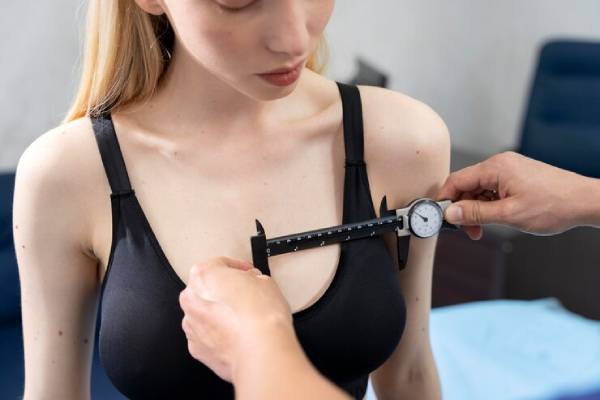
Depending on the characteristics of your breasts and how visible the difference between them is, this procedure may involve:
- Enlarging the smaller breast (breast augmentation);
- Reducing the larger breast (breast reduction);
- Enlarging or reducing both breasts;
- Lifting the more sagging breast (breast lift or mastopexy).[4]
Breast augmentation is the surgical procedure used when enlarging breast size and improving their shape is desired. Usually, to achieve the desired result, breast implants filled with silicone or saline solution are used.[1]
Breast reduction or breast reduction involves removing excess fat, skin, and breast tissue. Generally, it is a procedure used by people with large breasts, whose size causes them various problems, from chronic back or neck pain to affecting self-image. It can also be used to correct breast asymmetry.[3]
If the difference between the two breasts does not necessarily consist in their size, but rather refers to their position, a breast lift may be the right solution. During this procedure, excess skin is removed, breast tissue is tightened and reshaped, and the nipple and areola are repositioned.[2]
When breast symmetrization surgery is recommended
Such a procedure may be an option for you if:
- Your breasts are fully developed;
- There is a significant difference between their shape or size;
- One breast is more sagging than the other;
- You are physically healthy;
- You have realistic expectations.[4]
What you need to know before resorting to such a procedure
There are several aspects you should consider before deciding whether or not to resort to breast symmetrization surgery:
- The procedure will reduce the differences between your breasts at the time it is performed, but cannot eliminate the possibility that other changes may occur in the future; additional surgical interventions may be necessary to maintain breast symmetry;
- It cannot be guaranteed that breast implants will last a lifetime; they will need to be replaced at some point;
- Results may vary depending on the characteristics of your breasts;
- It is recommended to perform this intervention only after breast development has ended or you have stopped breastfeeding;
- If you smoke, you should try to quit before considering surgery.[4]
Asymmetric breasts are a common problem that many women face. Depending on how visible the difference between breasts is and to what extent this affects your life, you can resort to various methods to hide it. However, if you are interested in a more efficient solution with long-term effects, schedule a consultation! Dr. Olimpiu Hârceagă will help you find out if you need breast symmetrization surgery and what this will involve in your case.
Bibliography:
- “Breast Augmentation Guide.” ABCS, 12 June 2019. Accessed 8 Nov. 2022.
- “Breast Lift Guide.” ABCS, 17 June 2020. Accessed 8 Nov. 2022.
- “Breast Reduction Surgery – Mayo Clinic.” Mayoclinic.org, 2022. Accessed 8 Nov. 2022.
- Mariela Cadence. “Breast Asymmetry Correction.” Australian Society of Plastic Surgeons, Australian Society of Plastic Surgeons, 23 Mar. 2020. Accessed 8 Nov. 2022.
- “Why Are My Breasts Uneven?” Verywell Health, 2021. Accessed 8 Nov. 2022.
