Gynecomastia Surgery
Gynecomastia is a medical term that means breast enlargement in males. In most cases, there is no known cause and, although rarely discussed, it is a fairly common condition. For men who value their appearance, breast reduction surgery can be helpful. The procedure aims to remove breast tissue and, in extreme cases, excess skin.
A man’s body secretes both male hormones – testosterone, and female hormones – estrogen. When hormonal imbalances occur, problems such as gynecomastia can be triggered.
Physical appearance is important for men, although the condition does not endanger their lives. Emotional suffering can lead to decreased self-esteem, with some men being at risk of isolation and alienation from peers due to breast development.
Consultation with a plastic surgeon is essential for the patient, and the results of breast reduction surgery undoubtedly lead to increased self-confidence and emotional balance.
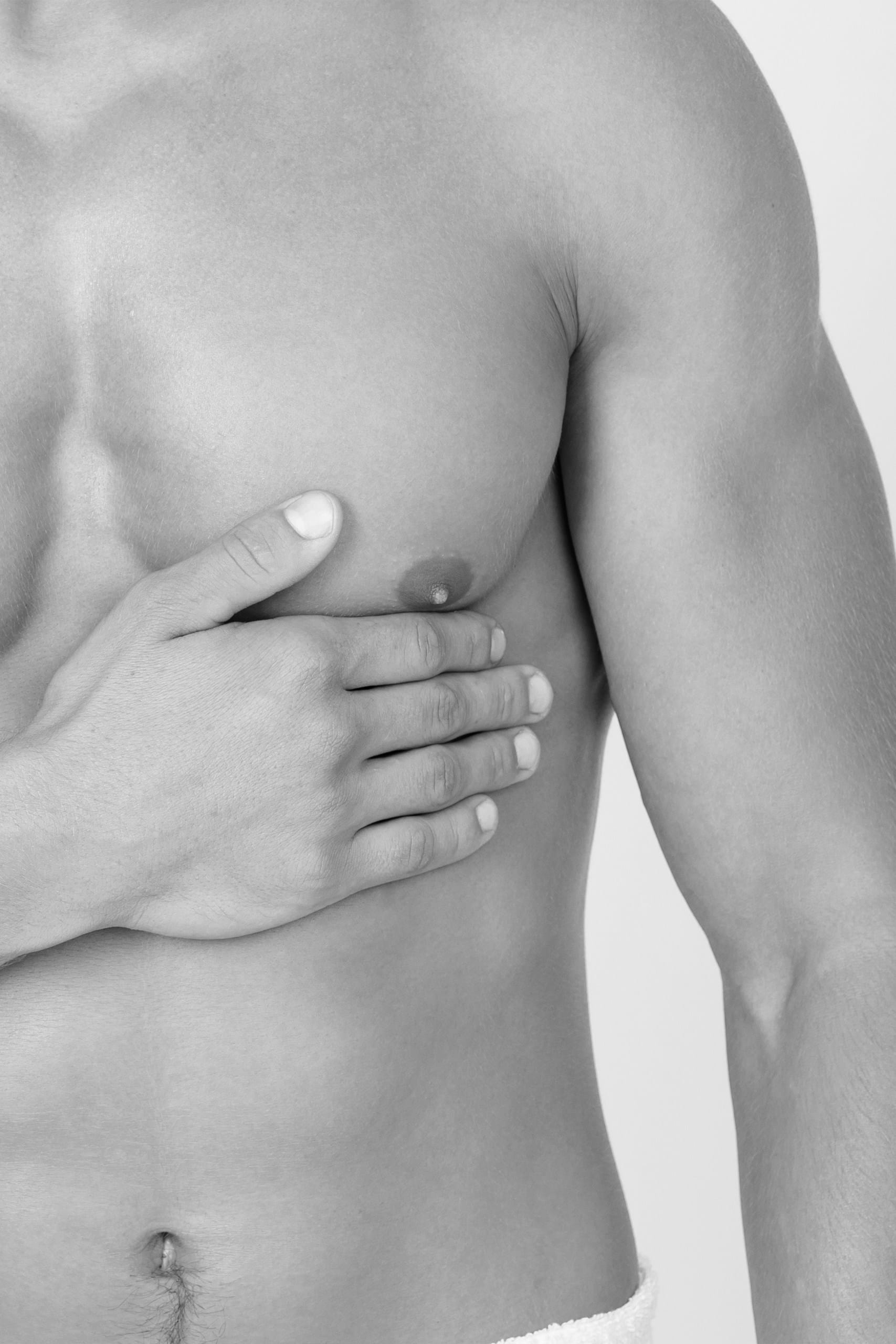
What are the causes that men may face with this problem?
01. What are the causes that men may face with this problem?
The causes of this condition are multiple, but we can speak of physiological and pathological manifestations.
From a physiological point of view, hormones are responsible for breast tissue growth. This phenomenon can be identified in babies as well, but it disappears quite quickly, while in adolescents it may be present for a longer period of time.
Adult men, after the age of 60, may face increases in mammary gland volume as weight increases, but also because testosterone production decreases.
The large volume of mammary glands can be observed bilaterally – in both breasts, but may be visible only in one – unilaterally. At the same time, there may be differences in volume and positioning between the two enlarged breasts.
Men and boys who face certain endocrine diseases or certain endocrine-metabolic disorders may experience such problems.
At the same time, some forms of cancer and associated treatments can induce gynecomastia.
Administration of certain substances – estrogens, corticosteroids, anabolic steroids – especially in the case of athletes and those who want to excessively increase muscle mass – can have as side effects excessive breast development.
There have been cases of gynecomastia due to consumption of antidepressants, antibiotics, alcohol, drugs or even hormones for treating another problem – infertility.
02. Who are the ideal candidates?
Before deciding to perform such a surgical intervention, the plastic surgeon must carefully consult the patient. Along with the physical examination, the doctor must be precisely informed about the person’s medical history. A breast ultrasound or mammography can also be performed, as well as certain hormonal analyses.
Only after having all the necessary information can the doctor present the procedure to the patient and the best course of action for performing gynecomastia surgery, so that the patient is correctly informed and can make a decision having all the data available.
Attention, the doctor must present the options, the pursued results, but also the risks associated with this intervention.
Candidates for this surgical procedure are those with good health, without severe diseases, who are not following chronic treatments.
03. What should you know before surgery?
Breast reduction surgery means removing fat, glandular tissue and excess skin.
Before the operation, you must maintain a state of health as good as possible and a weight appropriate for your age and height, for a quick recovery, without complications.
If you smoke, quit smoking six weeks before the operation; this will help with healing and reduce the chances of complications.
You should not remove or shave hair from the vicinity of the areas where the cuts will be placed on the skin. Maintaining strict hygiene will help reduce the risk of infection.
04. What does gynecomastia correction surgery in men involve?
The chest is composed of two main components, glandular tissue (firm and dense) and fatty tissue (soft). The ratio between glandular and fatty tissue differs from individual to individual, and in the case of gynecomastia there may be an excess of both.
If there is predominantly an extension of fatty tissue diffused at the breast level, liposuction is the appropriate treatment. This involves aspirating part of the tissue through a small tube, inserted through a 3-4 mm incision.
If excess glandular tissue is the main cause of chest augmentation, it may need to be excised (cut) with a scalpel. This will leave a scar, usually around the edge of the nipple. This excision can be performed as a single intervention or together with liposuction. Major reductions that involve removing a significant amount of tissue and skin may require larger incisions, which will result in visible scars.
Most gynecomastia procedures take approximately 90 minutes to complete and are performed under general anesthesia, or, in some cases, under local anesthesia with sedation. Overnight hospitalization is not necessary. Usually drain tubes are not necessary either.
05. What does recovery involve?
The chest is composed of two main components, glandular tissue (firm and dense) and fatty tissue (soft). The ratio between glandular and fatty tissue differs from individual to individual, and in the case of gynecomastia there may be an excess of both.
If there is predominantly an extension of fatty tissue diffused at the breast level, liposuction is the appropriate treatment. This involves aspirating part of the tissue through a small tube, inserted through a 3-4 mm incision.
If excess glandular tissue is the main cause of chest augmentation, it may need to be excised (cut) with a scalpel. This will leave a scar, usually around the edge of the nipple. This excision can be performed as a single intervention or together with liposuction. Major reductions that involve removing a significant amount of tissue and skin may require larger incisions, which will result in visible scars.
Most gynecomastia procedures take approximately 90 minutes to complete and are performed under general anesthesia, or, in some cases, under local anesthesia with sedation. Overnight hospitalization is not necessary. Usually drain tubes are not necessary either.
What are the benefits of gynecomastia surgery?
The benefits are multiple, both for regaining physical and emotional appearance. The physical, visible change will attract increased self-confidence, but also a redefined masculine appearance.
From a psychological point of view, the benefits are all the more important, self-esteem being an essential element for the development of modern man.
What are the risks and complications that can occur during male breast reduction surgery?
Potential complications of the surgical intervention are relatively rare. These include inadequate removal of breast tissue, uneven chest contour and decreased nipple sensitivity.
If excision was performed instead of liposuction, a blood clot may appear, which needs to be drained in a second operation.

General complications associated with surgery
Healing
Certain diseases, nutritional supplements, or medications can delay normal wound healing. Patients who have suffered massive weight loss may have delayed healing or may face wound opening, infection, requiring prolonged hospitalization and additional surgical procedures.
Those who suffer from diabetes or are under long-term steroid treatments may have delayed healing.
Smoking can cause more difficult healing and the need for additional surgical procedures. Healing can also be hindered by inflammation, bleeding, or a long-duration surgical procedure with general anesthesia.
There are nerve endings that can be caught in the scar associated with healing and can produce pain or hypersensitivity, even if larger nerve trunks are not injured.
Massage and other non-surgical procedures, applied at the beginning of the healing process, can alleviate these pains. Therefore, it is important to discuss aspects related to postoperative pain with the surgeon.
Bleeding and hematomas
There may be episodes of bleeding during surgery or postoperatively. In most cases, these are an exception. If postoperative bleeding occurs, emergency treatment may be needed to drain accumulated blood or blood transfusion may be necessary. These complications are truly rare.
It is important to follow postoperative instructions exactly and not perform physical activities during the specified time period.
Administration of aspirin or nonsteroidal anti-inflammatory drugs (ibuprofen) is prohibited for 10 days before and after surgery, as these can increase the risk of bleeding.
Nutritional supplements or herbal medicines can increase the risk of bleeding. A hematoma may appear in the first 2 weeks after surgery, usually after physical trauma to the operated site. Bruising is expected afterward, which should disappear within 2 weeks of surgery.
Infection
It is an unusual complication after surgery. If it occurs, antibiotics will be administered and hospitalization and additional surgical procedures may be necessary.
It is important for patients to specify if they have suffered an infection in the period before surgery. Infections in other parts of the body can lead to infection of the operated site.
Vicious, hypertrophic scars
All types of surgery leave scars, some more visible than others. After surgical procedures, good healing is expected, although abnormal scarring can occur both at the skin level and in deep tissues.
Although attempts are made to place scars in less visible locations, there is a small chance they may be visible, being different in color from the surrounding skin. The appearance of the scar can vary across its surface, can be asymmetric (the left side looks different from the right). There is a possibility of visible scars left by suture threads. Deep tissue scars may require revision or additional procedures to improve their quality.
Altered skin sensitivity
A decrease (loss) of skin sensation in the operated area is frequently encountered. The decrease in sensation may not resolve completely. Itching, sensitivity, or exaggerated response to heat or cold may occur after surgery. These symptoms resolve after a variable period of post-surgical time, but in rare cases can become chronic.
Sutures
In addition to the sutures at the skin level, which are visible, deep sutures are also used. These can be felt under the skin and can externalize through the skin, becoming visible and producing inflammation, in which case they must be removed.
Pain
Pain is one of the symptoms present after surgery. Pain of different variety and intensity can persist after the procedure. Chronic pain occurs very rarely and is caused by nerve endings caught in scars or occurs due to tissue stretching.
Complications due to general anesthesia
General anesthesia
Local anesthesia, but especially general anesthesia, carries risks for the patient. The possibility of respiratory tract injury, cardiorespiratory problems, allergies, anaphylactic shock, or even death are very rare in all forms of anesthesia associated with surgery.
Shock
In very rare circumstances, the surgical procedure can cause trauma, especially when multiple extensive procedures are performed. Although serious complications are rare, infections, excessive fluid loss can lead to serious illness. If surgical shock occurs, hospitalization and additional treatment are necessary.
Allergic reactions
In rare cases, allergies to dressings, suture material, adhesives, blood products, intravenously administered agents, or local creams have been reported.
Serious systemic reactions such as anaphylactic shock can occur in response to medications administered during surgery or prescribed postoperatively. Attention, allergic reactions may require additional treatments.
Cardiac and pulmonary complications
Pulmonary complications can occur secondary to blood clots (pulmonary emboli), fat (fat emboli), or partial lung collapse (atelectasis) after general anesthesia.
Pulmonary emboli can be life-threatening for the patient in certain circumstances. Inactivity, sedentary lifestyle, smoking, contraceptives, and other conditions can increase the incidence of blood clots that reach the lungs and can cause death.
It is important to discuss with the surgeon any symptoms, from leg inflammation to blood clots in other parts of the body, as they can contribute to the formation of pulmonary emboli.
Cardiac complications are a risk associated with any general anesthesia and surgery, even for patients without symptoms who are healthy.
If you suffer from fatigue or breathing difficulties when exerting yourself, chest pain, arrhythmic heartbeats, you should consult a doctor immediately.
If any of these complications occur, hospitalization and additional treatments are necessary. In healthy patients without associated diseases, these complications are very rare.
Tips for good recovery
- Do not expose yourself to direct sunlight or tanning salons after the procedure for a period;
- Postpone travel as a precautionary measure;
- The results of the procedure are long-term, but there are exceptional situations that can influence them;
- Intimate relations after the surgical procedure should be avoided in the first period of recovery.
What is the price of gynecomastia surgery?
€1,800 - €3,000
Mastopexy without implant
The costs mentioned are estimates, and they may vary depending on the surgical technique chosen, the complexity of the case, as well as any additional procedures or investigations required.
A detailed final cost can only be established following a medical consultation, in which the patient’s clinical situation will be assessed and the individualized therapeutic plan will be established. These costs include: the surgeon’s and anesthesiologist’s fees, the hospitalization period, all the medicines and materials needed during the surgery and during hospitalization. For a personalized estimate, we recommend scheduling a consultation.